
What Is a Sports Watch in 2025, Really?
The Omega Aqua Terra 30mm has a few answers.
According to horological history, a sports watch is rugged—the Jason Momoa in a world of Timothée Chalamets. It’s big, bulky and built, designed for the wrists of men who value adventure, action and athleticism. It’s performance first, aesthetics second—defined by features like “sweat, water and shock resistance,” “durability and dependability,” legibility and strong lume—and translated into military-inspired faces and rubber-made straps (shudder).

But as Omega President & CEO Raynald Aeschlimann attested this past June in Kyoto, Japan, during the launch of the new (and verifiably first women’s!) Omega Aqua Terra 30mm, this antiquated and reductive view of sports watches is no longer the law in 2025. In fact, according to him, the style has taken on an entirely new life.
Let’s go back to 2002, when the Swiss brand released the original Aqua Terra as an extension of its diver-inspired and Bond-approved Seamaster series. More elegant than its counterparts, this new style was Omega’s response to a world no longer split into dichotomies. Timepieces until that point had been bound by a choice: function or fashion. And the extreme was even more pronounced for women, the options reduced to a dainty bracelet to pair with your daytime pearls or a plastic wristband fit for your mountain bike.
The new millennium demanded something different because life was different. Dress codes relaxed. Wellness and fitness became more mainstream. And the rise of athleisure made it easier to go from the gym to work to dinner without changing clothes — or watches.
“That’s why [it] has to be sporty,” Aeschlimann explained at the unveiling in Kyoto. “The Aqua Terra can be worn during your whole week, from the weekend, to meeting for a cocktail, to playing sports, walking the dog, everything. And the 30mm is the most incredible example of an elegant sport watch.”

Indeed, don’t let the smaller size fool you—the Omega Aqua Terra 30mm packs a powerful (and pretty!) punch. Within the 12 new styles, precious metals and materials abound: stainless steel cases paired with deep-sea blue and purple faces; 18K Moonshine Gold flirting with luminescent mother-of-pearl dials; and 18K Sedna Gold encircled by a ring of diamonds.
Like its predecessors, nods to its maritime heritage come through in teak-inspired dials (originally designed to mimic yacht decking) and water resistance up to 150m. But where the 30mm truly distinguishes itself is in its new movement.
Tucked into these bite-sized watches are Omega’s latest calibres, reimagined over four years and engineered specifically for this more intimate scale: the Master Chronometer Calibre 8750 for stainless steel and two-tone models, and the Master Chronometer Calibre 8751 for 18K Sedna and Moonshine Gold. These movements carry all the hallmarks of Omega—Co-Axial escapement, anti-magnetic properties, over 48 hours of power reserve—just in a petite package, visible through a transparent sapphire crystal caseback.
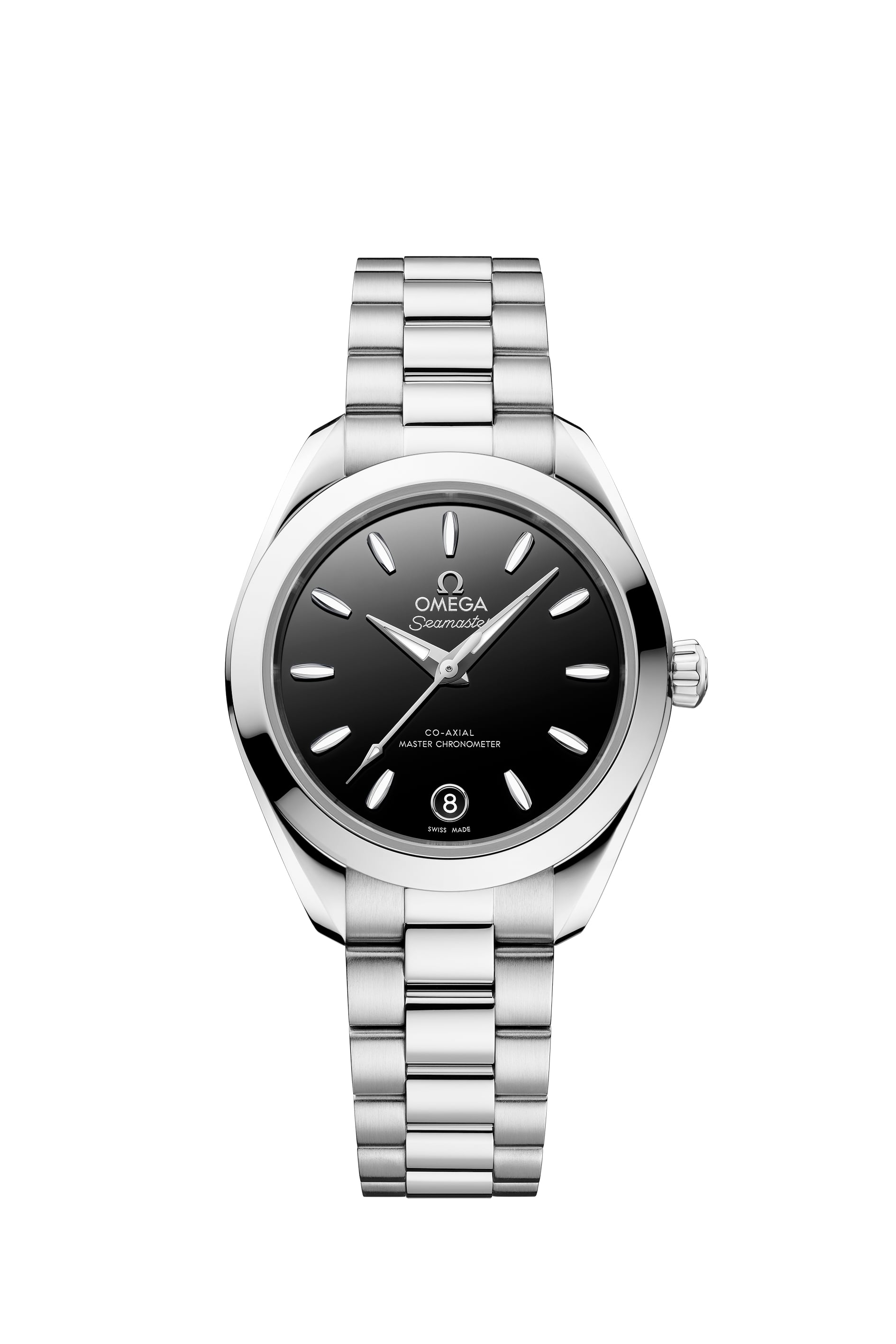
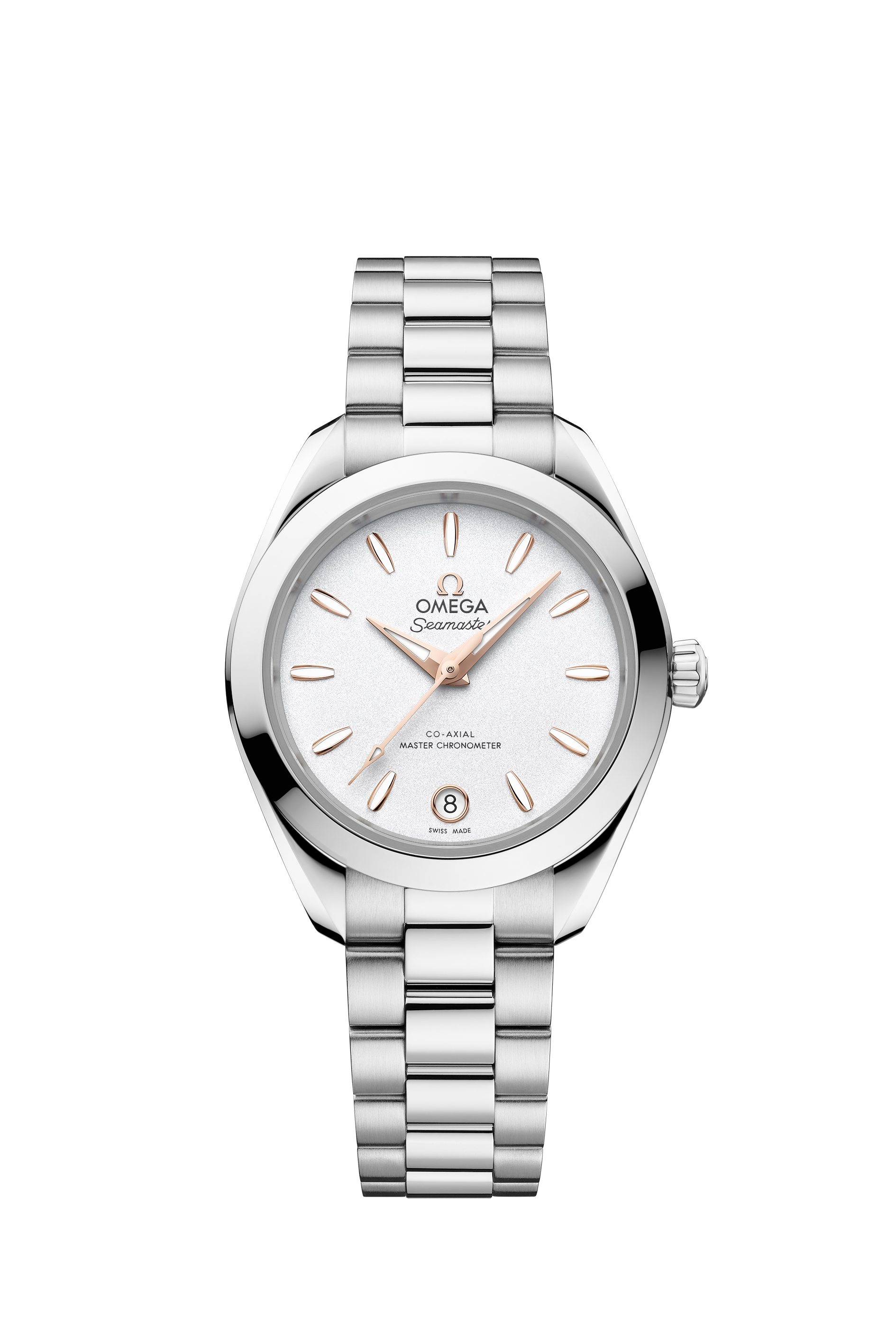
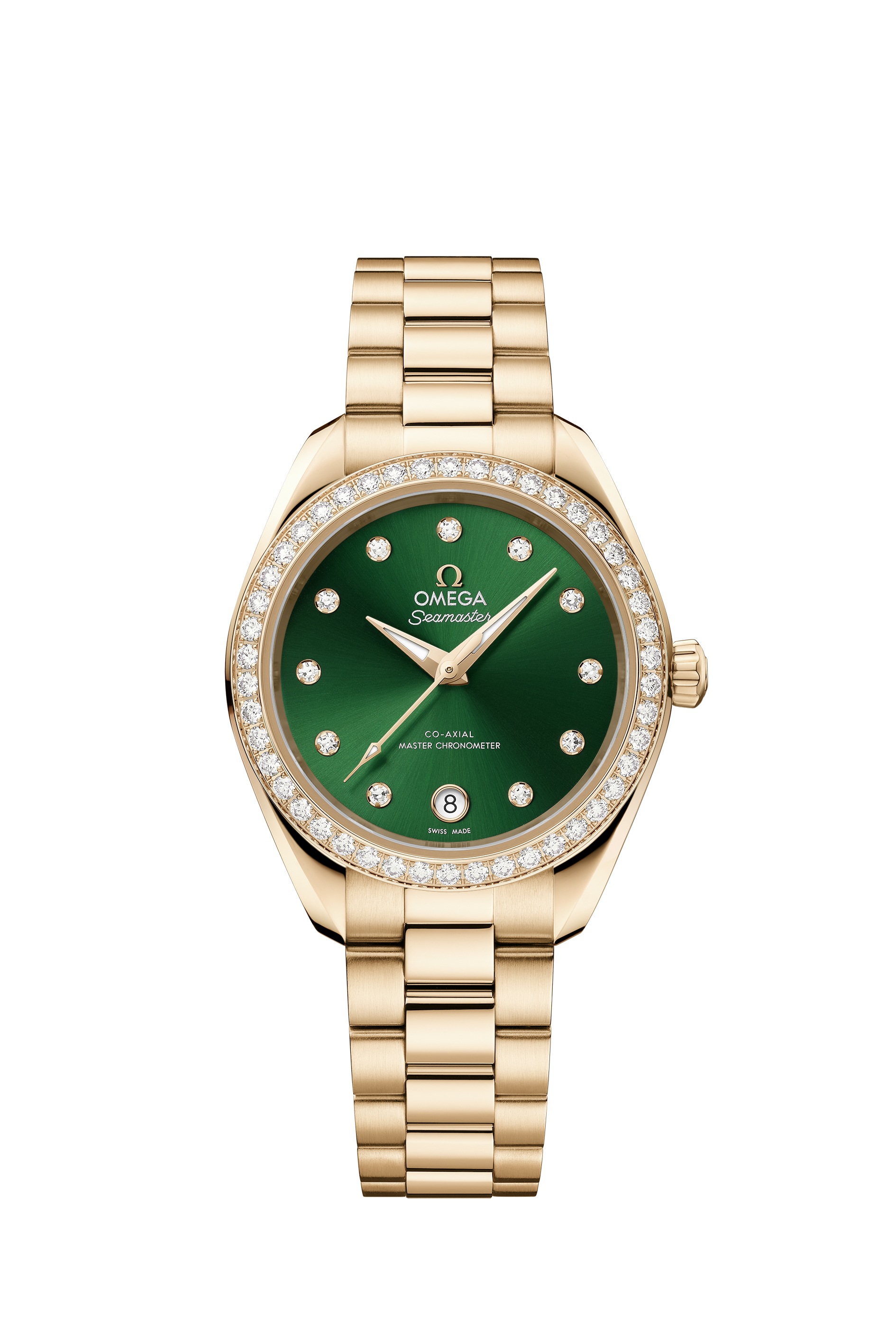
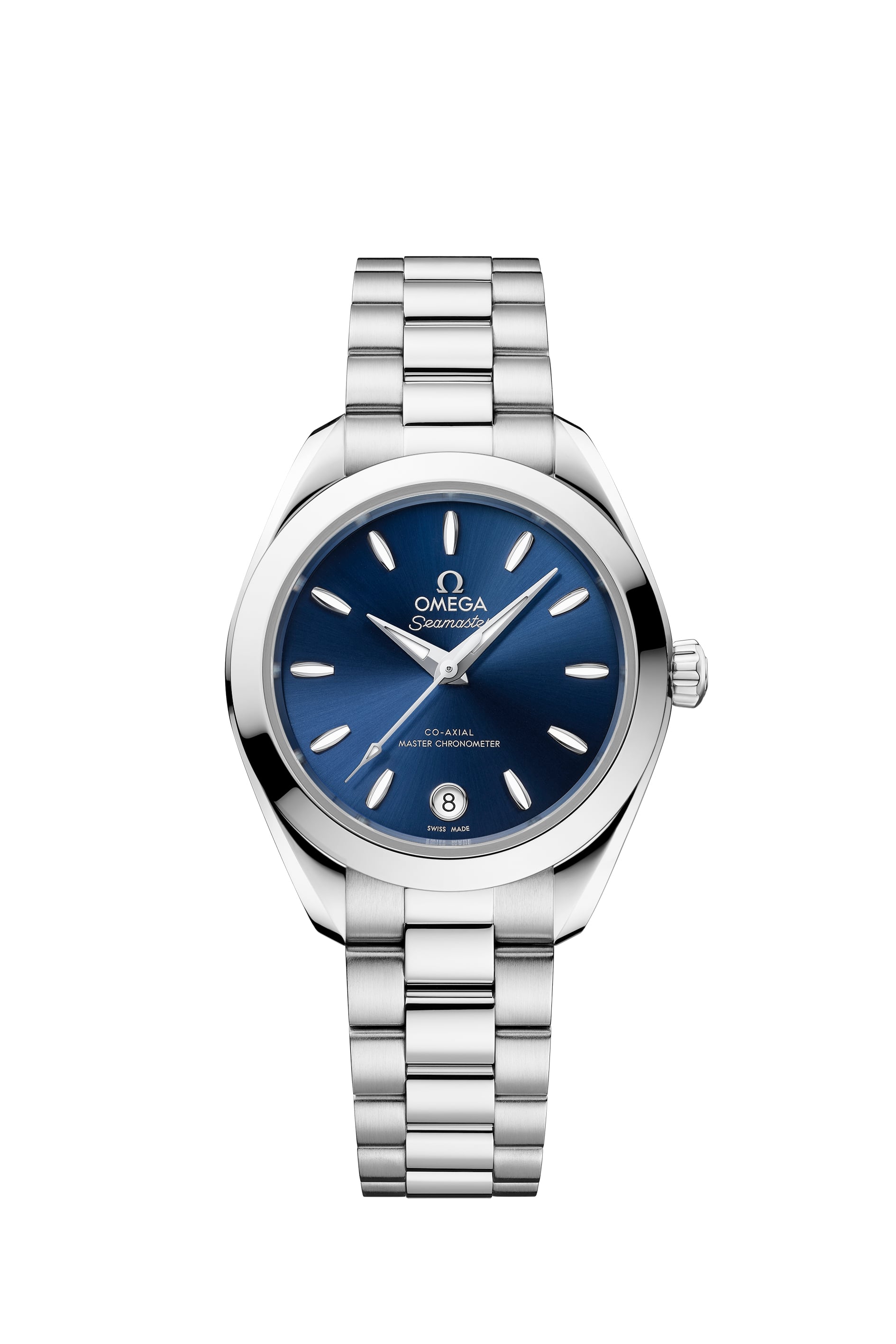
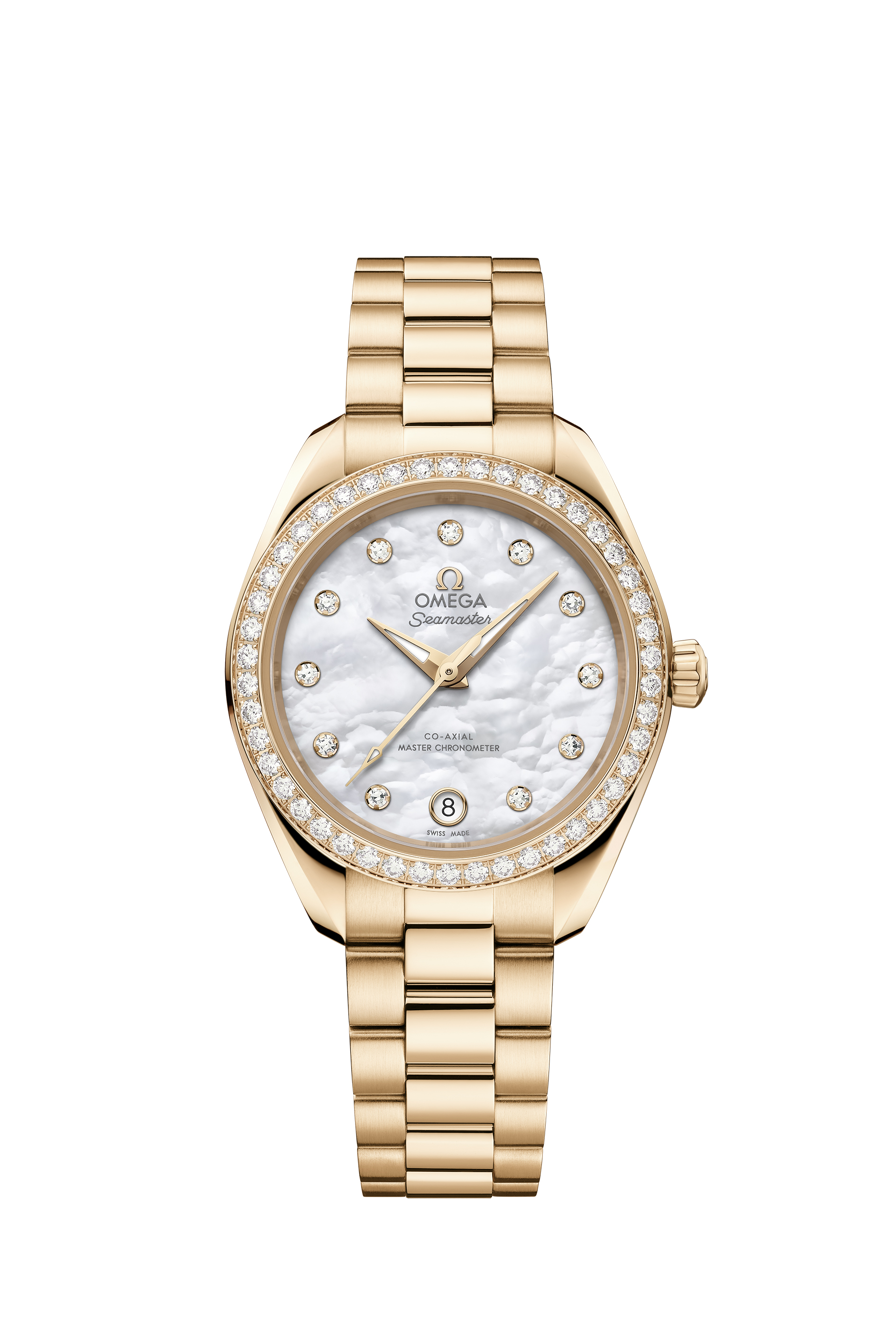

Ultimately, as the Aqua Terra 30mm proves, the best hybrid sports watches today aren’t defined by their ability to resist sweat or taking up the most real estate on your wrist. They’re defined by how well they move through the modern world—fluidly, fashionably and ready for whatever the day demands.
“I think that if there’s one brand that [understands], it’s us,” shares Aeschlimann. “We are not jewellers — sports is in our DNA. And you can wear the Aqua Terra at any moment of your life.”

Annika Lautens is the former fashion news and features director of FASHION Magazine. With a resumé that would rival Kirk from "Gilmore Girls", she’s had a wide variety of jobs within the publishing industry, but her favourite topics to explore are fashion sociology and psychology. Annika currently lives in Toronto, and when she’s not interviewing celebrities, you can find her travelling.