
The Rise of Vintage Athleisure
Following an era of showy perfection, workoutwear takes the pressure off—and looks cooler than ever.
Each time I get ready for a Pilates class, I perform an unnecessary humiliation ritual in my home. I run around my room, rummage through my sock drawer and—on my darkest days—search my hamper to piece together a cohesive workout uniform. I pay the price of panic before every class so that by the time I settle onto the reformer, I feel like I belong. It’s all in pursuit of passing as a “Pilates princess”: the ruling athleisure archetype swathed in skin-tight synthetics. Lately, though, I’ve started to question why.
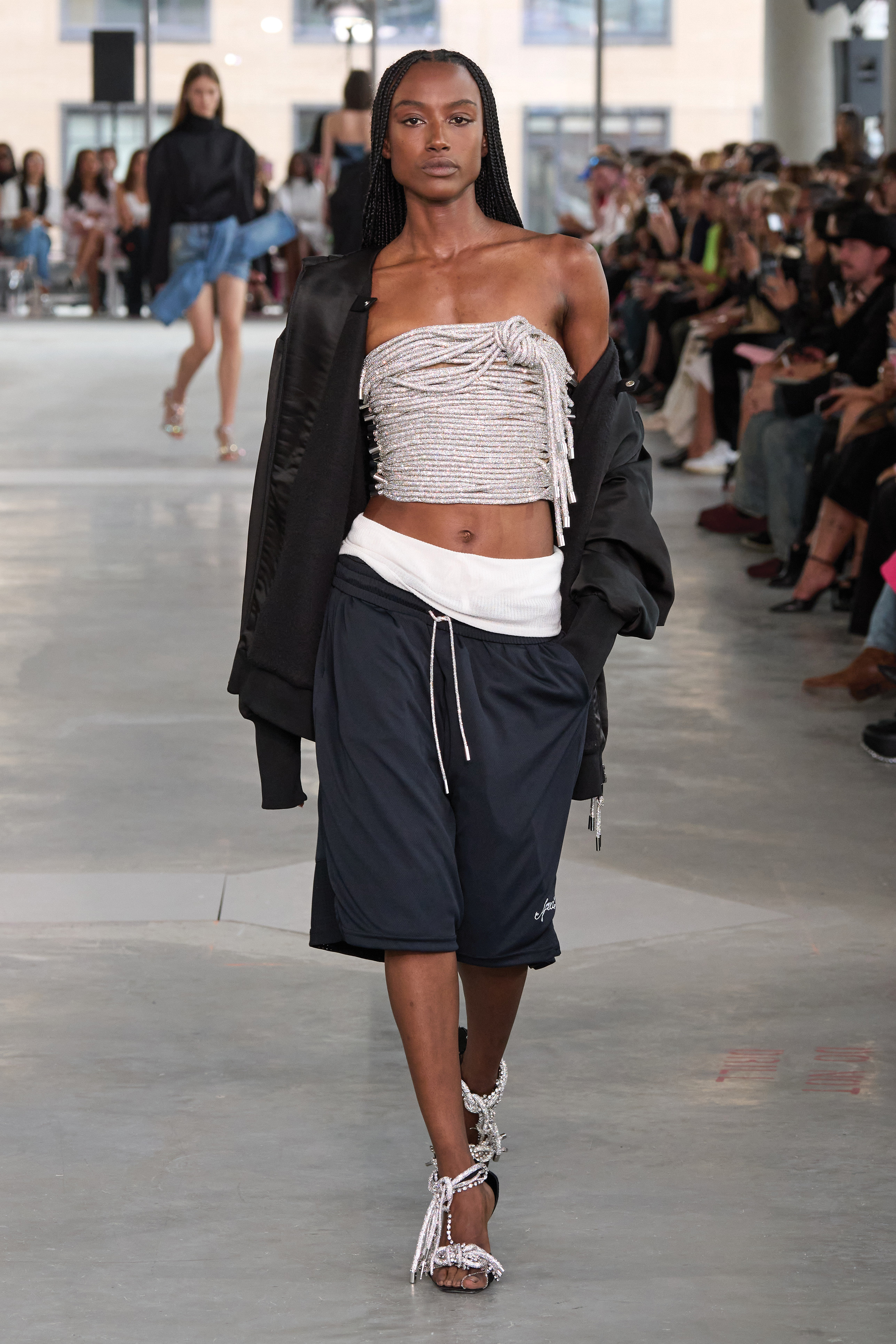
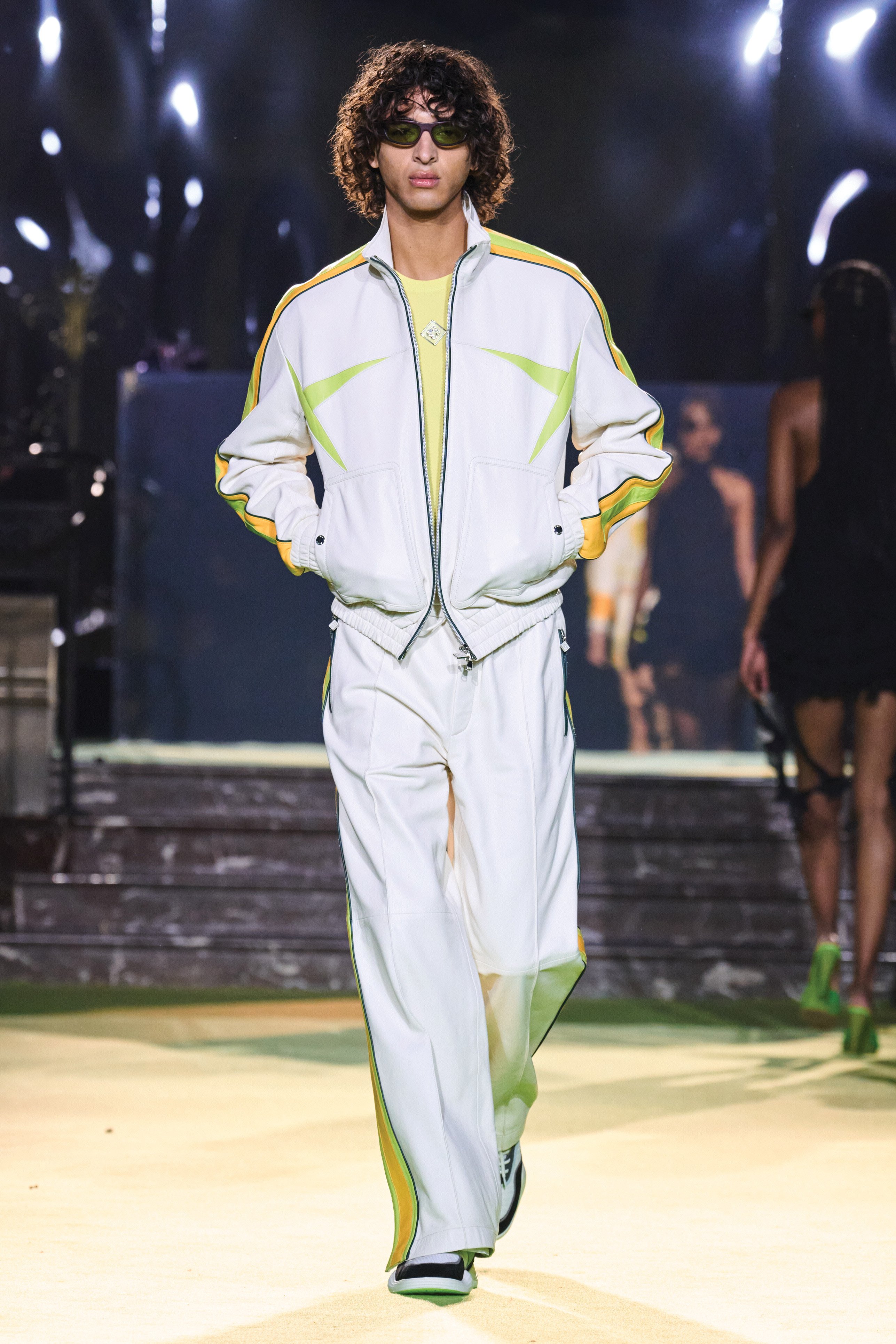
There’s a vibe shift happening in activewear, and it takes aim at ubiquitous buttery basics. TikTok has deemed 2026 “the year of the anti-workout set” and pronounced the Pilates princess dead. Pinterest boards are filled with early-aughts images of J.Lo in swishy track suits and Cameron Diaz in functional, if unfashionable, runners. Miranda Hobbes is praised for the earnestness of her sweat-drenched cotton T-shirt; Carrie Bradshaw’s low-slung jogging pants are referenced at large. Princess Diana occupies her own category here: Her ’90s-era bike shorts and hiked-up socks serve as the blueprint for gym-ready dressing. Even modern It girls—Addison Rae, Amelia Gray and Bella Hadid—have swapped co-ords for all-over-the-place exercise outfits. After years of monochromatic sameness, sportswear is suddenly becoming more personalized and more referential to the past. But why?

According to designer Emily Nabnian, it comes down to our desire to be less online. She runs Zest, a newsletter filled with 2000s paparazzi shots—Beyoncé walking through a parking lot in billowy Adidas culottes; Jessica Alba listening to an iPod Nano in a turquoise Nike bra—alongside links to shop similar pieces. To her, these grainy pictures are aspirational because their subjects aren’t performing. “These celebrities were being photographed by paparazzi; they weren’t distributing their image on Instagram,” she explains. (Princess Diana was actually trying to deter photographers by looking “boring.”) Their clothes, Nabnian adds, appear tactile and lived in—a nonchalance at odds with the slicked-back gym looks du jour. “Today’s sleek aesthetic, with all the matching sets, is a reflection of our culture’s obsession with hyper-optimization,” she says. “I think the interest in vintage athleticwear stems from a broader longing to be more present in real life.”
Using workoutwear as a framework for mindfulness is the basis of Toronto-based brand Literary Sport. Its minimalist pieces are non-restrictive, intended for layering and precise in their execution—from a crisp T-shirt made of Japanese merino to nylon blend capris with discreet pleating. Instead of following athletic trends, creative director Jackie McKeown looks to architecture, design, art and, titularly, literature for inspiration.
“There’s a quietness to the garments,” says McKeown, who is an avid runner herself. “We’re not looking at running as competitive; it’s not about shaving off seconds. It’s about enjoying the practice in the same way that you would enjoy a novel or a poem.” Materially, that translates to thoughtful, secret details, like a hidden back pocket for your debit card or key. “It’s a personal thing,” McKeown notes. “It’s less about making you faster.”
“It’s about breaking out of clean-girl categorizations and using exercise as an invitation to play—or, in her words, find your inner freak.”
This ethos—inner satisfaction over external validation—is what Jennifer Winter, founder of Nice Day Pilates, has built her business on. In her Toronto studio, she doesn’t encourage skin-hugging uniforms. Her space is mirrorless, allowing clients to focus on how they feel. “It’s a vulnerable thing to enter a studio, so we want people to come as they are,” she says. Not everyone has understood the vision. “It’s funny—last summer, we got a one-star review because one of our instructors was wearing wide-leg cotton denim shorts,” she recalls. But where TikTok-era Pilates has become aesthetically prescriptive, she notes that this is antithetical to the practice, which started as an accessible activity for people with disabilities.
Winter’s style embodies this easygoing inclusivity. Largely sourced second-hand, her studio wardrobe comprises flowy trousers, off-the-shoulder tops and baggy basketball shorts with fun accessories peppered in. (When we chat, her fingers are covered in sculptural rings.) She says that athleisure’s current shift is thanks in part to a growing awareness about clothing materials. She has noticed people questioning micro-plastics in synthetics and opting for natural fibres, like cotton, instead. “Maybe your sweat shows a little bit more, but if you’re in a space with no mirrors, then who cares?” she says.
In fact, Nabnian would argue that sweat is what it’s all about. “I think the embrace of cotton sportswear, and therefore sweat, is linked to a societal trend in which people are gravitating toward effort,” she says. She points to the now-infamous Timothée Chalamet speech at the 2025 SAG Awards, where, instead of humbly giving thanks, he declared that he’s in pursuit of greatness. “When it comes to hard work, we want to see proof: Strava receipts instead of a-day-in-the-life photos; strength training in the face of Ozempic.” Good old perspiration is a result of exertion, unlike a posed studio selfie. As Nabnian puts it: “You can’t fake sweat.”
Photography courtesy of Launchmetrics
Though they diverge from the Alo two-piece standard, Winter, Nabnian and McKeown all emphasize that there’s nothing wrong with wearing compression garb, if that’s what you prefer. McKeown even credits the Pilates princess with igniting a new cultural conversation. “Nobody was really talking about fashion and sports, especially for women, as much as they have over the past two years,” she says. “I think people are now realizing that they can show up in the athletic space in a more expressive way.”
Ultimately, this is the premise driving Nabnian’s own sportswear line, which she hopes to start rolling out later this year. It’s about breaking out of clean-girl categorizations and using exercise as an invitation to play—or, in her words, find your inner freak. “It’s for the outsiders—the people who want to do their own thing,” she says. “That’s where the thesis begins.”
Midway through writing this piece, I decided to try my hand at this aforementioned freakiness. Instead of my usual all-black elastane, I reached for a pair of low-rise white Lululemon shorts I’d recently found at a clothing swap and my mom’s faded-blue cotton Reebok T-shirt from the ’90s. At my candlelit Pilates class, I noticed another rebel, in a graphic tee and track pants. There was a thrill in how we stuck out in the surrounding sea of uniformity. We were sweat-stained and certainly not selfie-ready, but we were free.
This article first appeared in FASHION’s April 2026 issue. Read more stories from FASHION’s April 2026 issue here and subscribe to the print issue here.

Natalie Michie is the Fashion & Features Editor at FASHION Magazine. With a pop culture obsession, she is passionate about exploring the relationship between fashion, internet trends and social issues. She has written for Elle Canada, CBC, Chatelaine and Toronto Life. In her spare time, she enjoys reading and over-analyzing movies on TikTok.