
Has the NHL Finally Found Its Style?
Hockey has long been written off as the least fashionable sport. But with relaxed dress codes and stylists hired to help, the NHL may finally be getting an aesthetic upgrade.
In 2018, after years of dressing like they were headed for the Playoffs in matching custom-made Thom Browne suits. They went viral, and the tunnel-fit phenomenon—where the walk from bus to dressing room doubles as a runway—took off. Since then, athletes of all kinds have transformed into fashion influencers, landing luxury-brand deals, red-carpet invites and front-row seats at fashion week. That is, except for the guys who play hockey.
For a long time, NHL players have watched, perhaps with envy, as football, basketball and soccer pros have made flashy dressing synonymous with their sports. Hockey players have never had a reputation for looking particularly cool. From the messy hair and unkempt playoff beards to the often-too-tight suits, hockey culture has historically prized conformity over charisma. The league’s dress code—the strictest of all sports—reinforced that mindset, requiring players to wear “jackets, ties and dress pants” to and from all games and while travelling. Without much tailoring literacy, most players defaulted to the same slim, made-to-measure look (a fit that is especially circulation-cutting and uncomfortable on a muscular body). Last season, however, the rules suddenly changed.
In a historic move, at the prompting of the National Hockey League Players’ Association (NHLPA), the NHL finally agreed to give players more freedom in how they present themselves off the ice. The timing was perfect: Shortly after the announcement came Heated Rivalry, the steamy Canadian romance about two closeted hockey stars. With charismatic leads and more sex than skating, the show brought in a fresh wave of fans wondering what the actual game was all about. This new cultural relevance coincided with the relaxed dress code, which no longer demands suits but states simply that NHL athletes should dress “in a manner consistent with contemporary fashion norms.” Players are now left with a new challenge: figuring out what exactly that means.

Mikhail Sergachev, a two-time Stanley Cup champion and defenceman for the Utah Mammoth, admits that “going from suits to full freedom is a big step.” That’s why he followed the lead of NBA players he admired and tapped stylist Nastássia Andreyanova to help him fine-tune his look. In contrast to the low-profile hockey archetype, Sergachev stands out with designer-level taste. He favours Dries Van Noten tailoring, Burberry outerwear and splurge-y Jacques Marie Mage sunglasses and opts for looser silhouettes that actually suit a 212-pound athlete.
Since he started working with Andreyanova last summer, Sergachev has leaned into slouchy ’70s and ’80s tailoring while pulling inspiration from menswear stars like Jacob Elordi, Lewis Hamilton and A$AP Rocky. One of his favourite parts of this process has been seeing his teammates’ response to his out-there ensembles. “Before a game, I look at them for their reaction—to see if they’ll laugh,” he says. Is there some locker-room chirping? “Obviously.” Still, the way he sees it, the simplified dress code is both liberating and practical: fewer suits to pack, garments to press and changes to fit into a day.
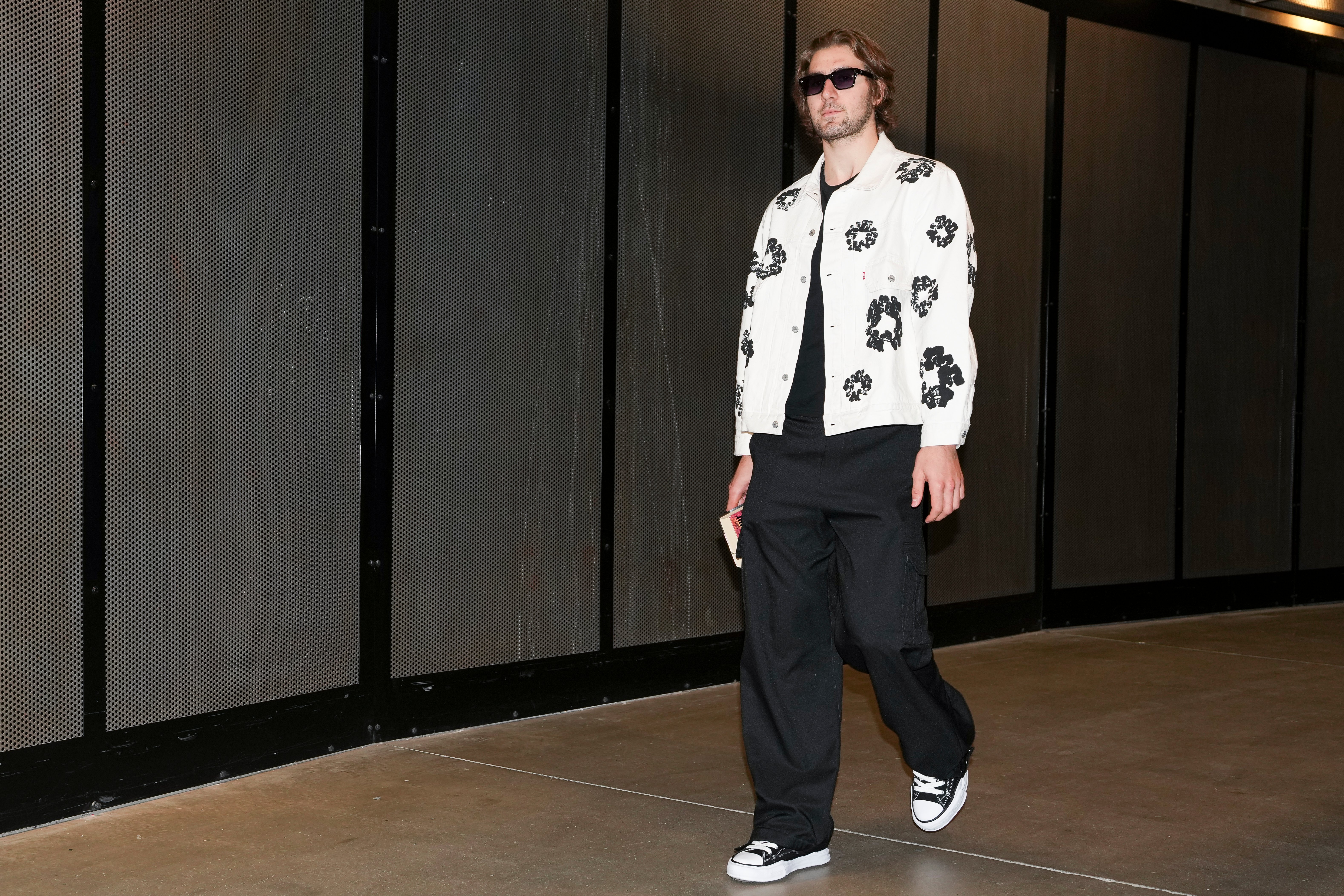
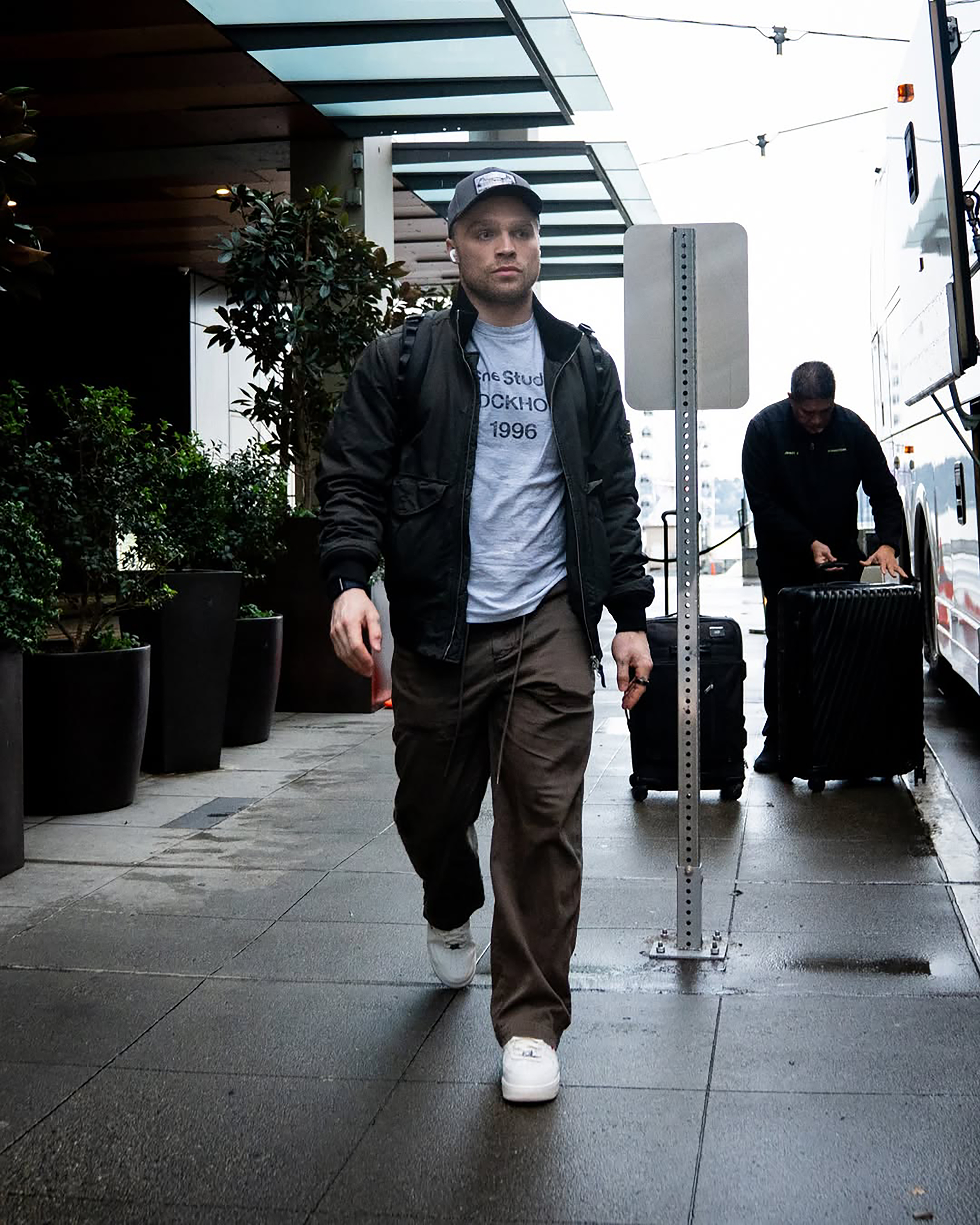
Photo by Eli Rehmer/NHLI via Getty Images
Dmitri Simashev
Not everyone is leaning in as hard as Sergachev, and not everyone has hired a stylist. But the shift has undeniably opened a door, with certain teams even monetizing the moment. The Dallas Stars’ tunnel-fit posts, for instance, are now sponsored by the car brand Lexus. From a business perspective, good athlete outfits have proven to have major ROI (tunnel-walk videos are some of the NBA’s highest-performing posts across social media), so it’s likely that the NHLPA and the NHL are hoping that this new flexibility translates to greater visibility and connections with audiences—not to mention, a stronger grasp on pop culture.
The fact is, Heated Rivalry has given hockey a much-needed PR boost. With its longtime suits-only strictness, the sport has been known for fostering a misogynistic culture—one that was exacerbated during the 2026 Milano Cortina Olympics, when a viral video showed the U.S. men’s team laughing with President Donald Trump at the women’s team’s expense. Hockey clearly has a long way to go, but with two fictionalized gay players leading a zeitgeist-y rebrand and more opportunities for aesthetic experimentation, there’s hope on the horizon.
Marie-Michèle Bonneau, the founder of the Montreal-based talent agency Teamm, emphasizes how much catching up the NHL has to do when it comes to fashion—particularly in Canada. She’s working to connect stylists with players, to help them strategize their image. “There is enormous untapped potential,” she says. Hockey has historically encouraged a keep-your-head-down narrative—a notion that blending in means you’ll be a better player. Bonneau disagrees. “When done properly, off-ice identity doesn’t detract from performance—it supports longevity, marketability and life beyond the game,” she says.

Signs of progress are already showing. William Nylander, who was once considered a stylish outlier, is now in the company of other well-dressed players: The Anaheim Ducks’ Leo Carlsson is wearing Chrome Hearts, the Canadiens’ Jayden Struble is rocking Stone Island and his teammate Kaiden Guhle is stepping out in cult-favourite Marty Supreme merch.
“When done properly, off-ice identity doesn’t detract from performance.”
Perhaps the best example is the Canadiens’ Patrik Laine, who has long embraced playful patterns and unexpected tailoring, even when limited to suits. The new autonomy has only amplified his penchant for risk-taking. “He’s excited to have more flexibility and collaborate with different designers,” says his wife, Jordan Laine, adding that this kind of self- expression enriches the job. “It’s one of the few ways that fans can get to know the guys a little more.” Is a leaguewide fashion revolution next?
Sergachev isn’t so sure, but he hopes the movement continues to have athletes inspiring one another. “It means a lot when players I’ve never spoken to before tell me they look at me for inspiration, and I always say something when I see a good outfit,” he says. “I hope that one day NBA guys might look to us for inspiration, too.”
This article first appeared in FASHION’s April 2026 issue. Read more stories from FASHION’s April 2026 issue here and subscribe to the print issue here.

Ben Kriz is a Toronto-based freelance writer covering menswear and culture for publications like GQ, SHARP, and NUVO. He’s held a range of roles across the retail industry and was most recently Head of Editorial at Harry Rosen. He still likes to wear a tie now and then, and his favourite restaurant is L’Express in Montreal.