
Men’s Suiting Is Finally About Self-Expression Again
Today’s suiting isn’t about dressing the part. It’s about dressing like yourself.
You don’t have to be a cinephile to enjoy Toronto’s festival season. From exclusive film premieres and sneaking drinks between screenings at Varda to rubbing elbows with stars (or at least trying to) on the Ace Hotel rooftop, TIFF is the whole package. For 10 days, the festival transforms the city into a glamorous playground. It’s the perfect excuse to break out that eveningwear you’ve been saving for a special occasion.
Every year, I admire the long lines wrapping around the theatres, where most of the attendees are standing in their best suits. When I join them on those balmy September nights (wearing my black corduroy blazer from Calvin Klein), I feel like we’re carrying on a legacy. Good suiting and good movies have had a long, storied history together. Old Hollywood icons like Cary Grant made the blazer into the cultural symbol it is today. His ensembles in To Catch a Thief set the standard for sophistication: narrow collars, roped shoulders, cutaway hems. These codes mirrored the traditional expectation that society had for men: to be dependable, proud and strong.
After seeing Sidney Poitier’s suavely styled performance in Guess Who’s Coming to Dinner as a teenager, I hunted for these classic styles at my local department stores. While the look did make me feel more like a “man” in the historical sense, it didn’t correspond to my modern experience of masculinity. When I longed to be expressive, my stiff, straight-cut navy blazer from Sears made me fade into the background.
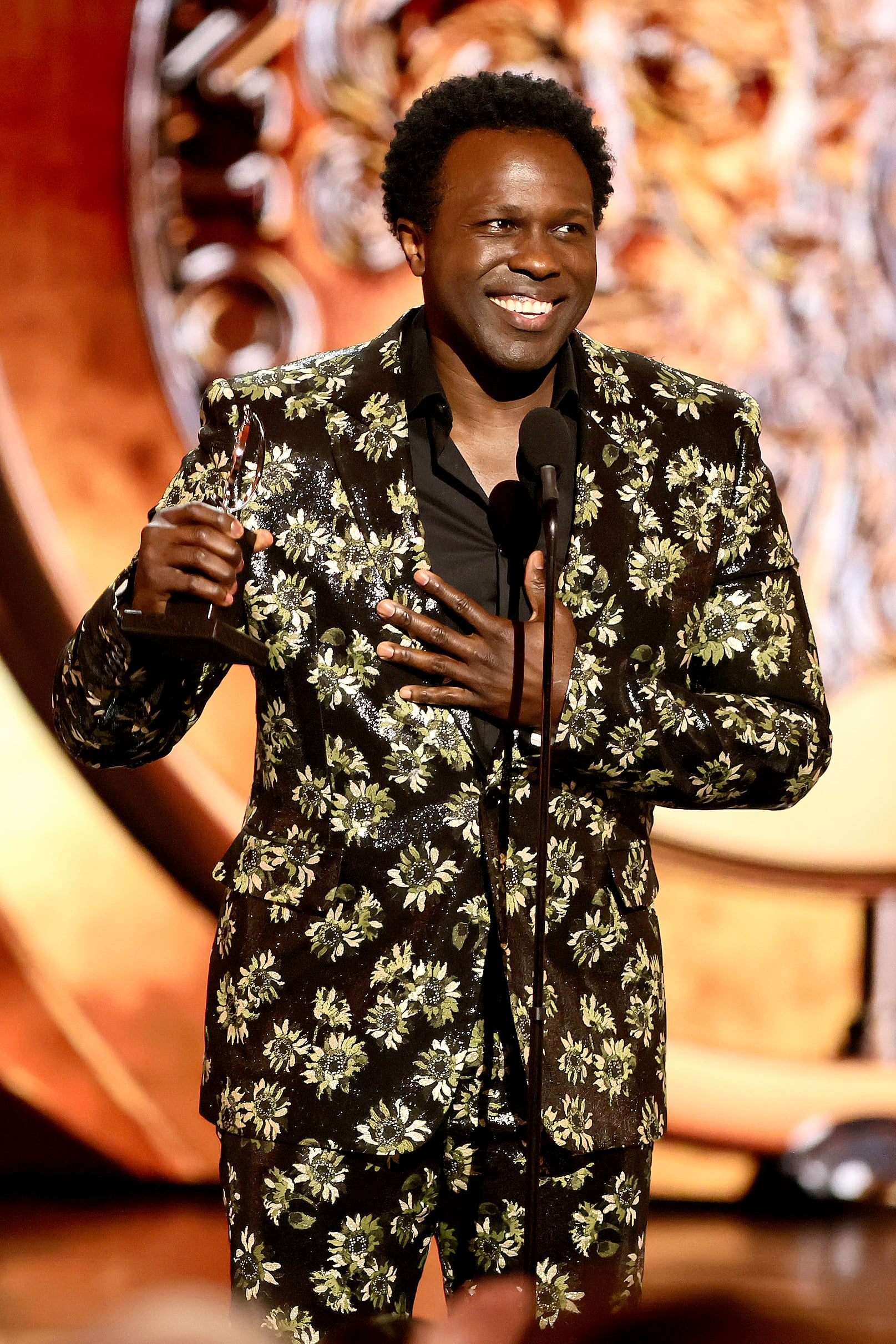
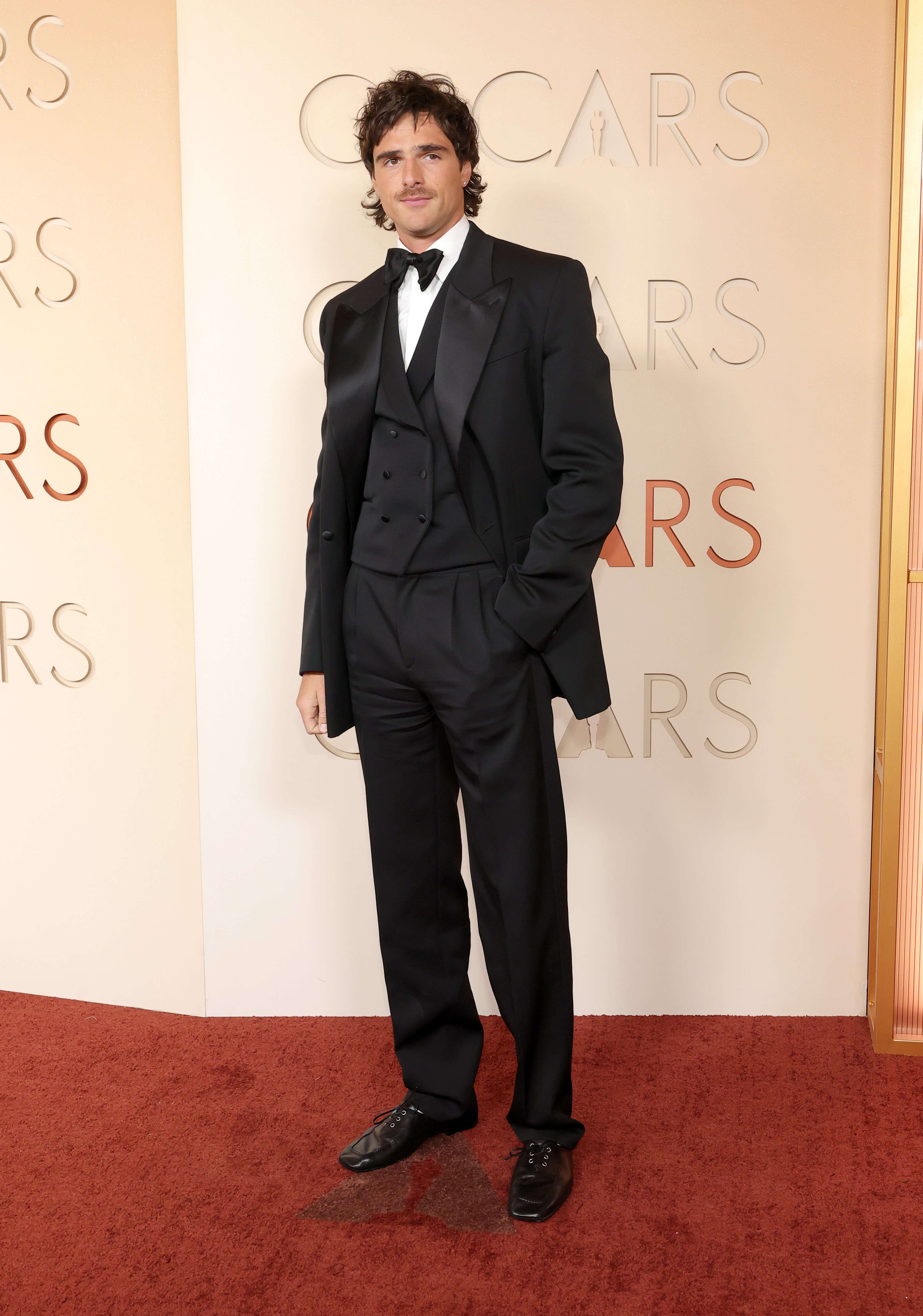
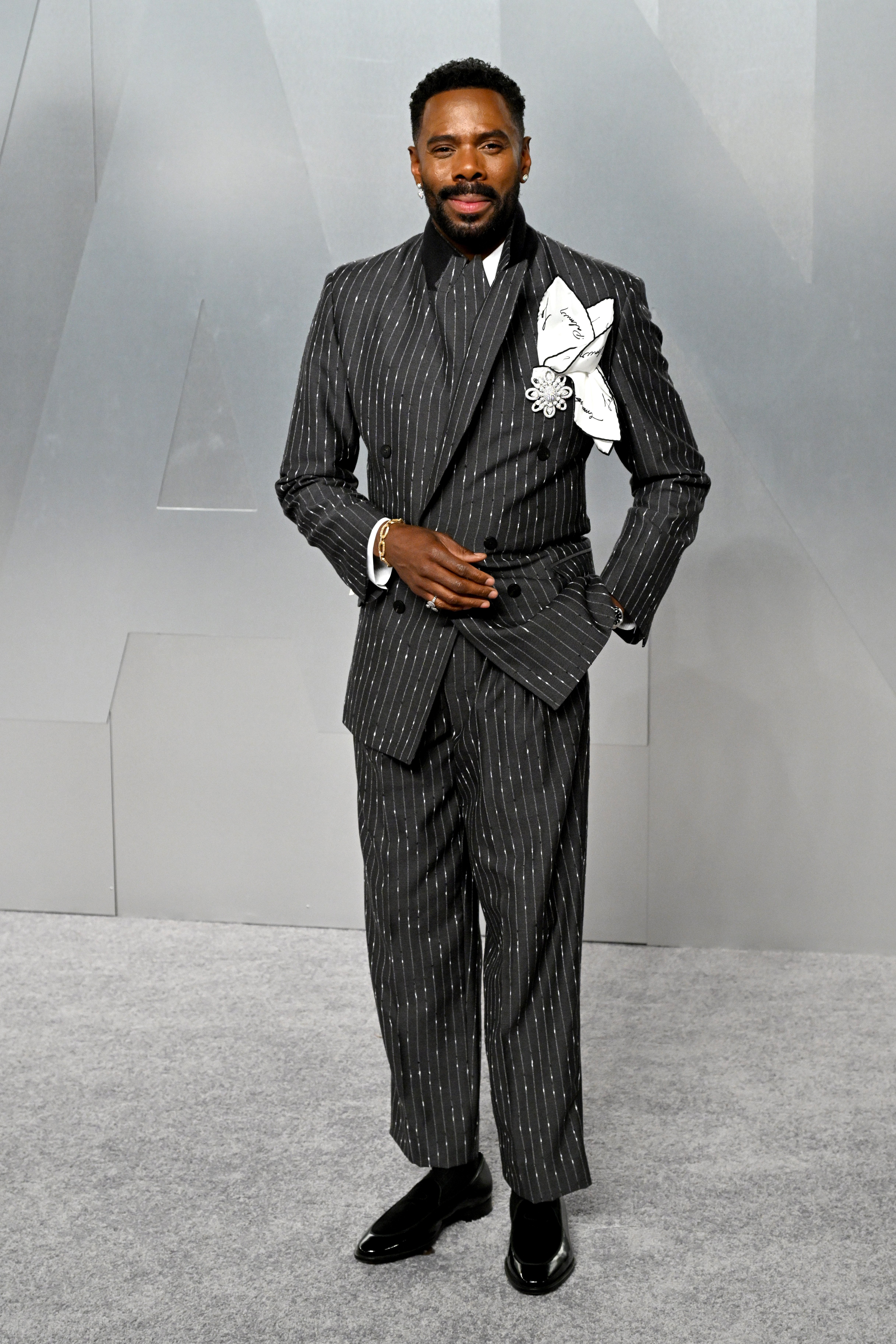

Photo by Lionel Hahn/Getty Images
Turns out my teen self could have used some inspiration from today’s red-carpet set. What makes the suits they wear so exciting is the fresh way they’re being styled. Besides starring in some of my favourite films, what actors like Colman Domingo, Josh O’Connor, Michael B. Jordan and Timothée Chalamet have in common is their singular approach to suiting. These stars aren’t completely shedding the dressing tradition, but they’re showing a new generation how to manipulate wardrobe classics to express the many sides of their identities.
Today, these men are giving us more to look forward to. Between Joshua Henry’s shiny embellishments and Jacob Elordi’s understated black satin, this season shows how designers are reimagining the suit to work for every kind of man. One of the more popular renditions encourages men to embrace their sensual sides with a pin-slim fit. The style is all the rage with Demna, the newly minted creative director at Gucci. His new collections feature cinched-waist silhouettes characteristic of the 1970s through the 1990s. They’re perfect for the finance bro who wants to emulate the stealth-wealth style of HBO’s Industry.
While the look did make me feel more like a “man” in the historical sense, it didn’t correspond to my modern experience of masculinity.
For a more mature look, slip into Tom Ford’s American Psycho-tinged pinstriped ensembles. Prada and Ann Demeulemeester’s similar body-hugging approach leans into a punk sensibility, clean-cut bomber jackets with frayed edges and shrunken crushed-velvet blazers. And Dior introduced tweed coats cropped at the waist, narrow trenches with golden-lamé trains and bushy fur cuffs. By removing the pressure to perform that’s typically associated with suiting, these unconventional re-imaginings empower wearers to show up as the most radical thing of all—themselves.
Continuing this theme of authenticity, brands like Willy Chavarria and Saint Laurent riff on effortless chic with wider silhouettes. With raised shoulders, broad chests and double-breasted styles, their pieces echo the vibe of 1940s zoot suits and 1980s power dressing. The bravado of these garments could easily blend into Dick Tracy’s wardrobe, but it’s their easy manner that sets them apart.
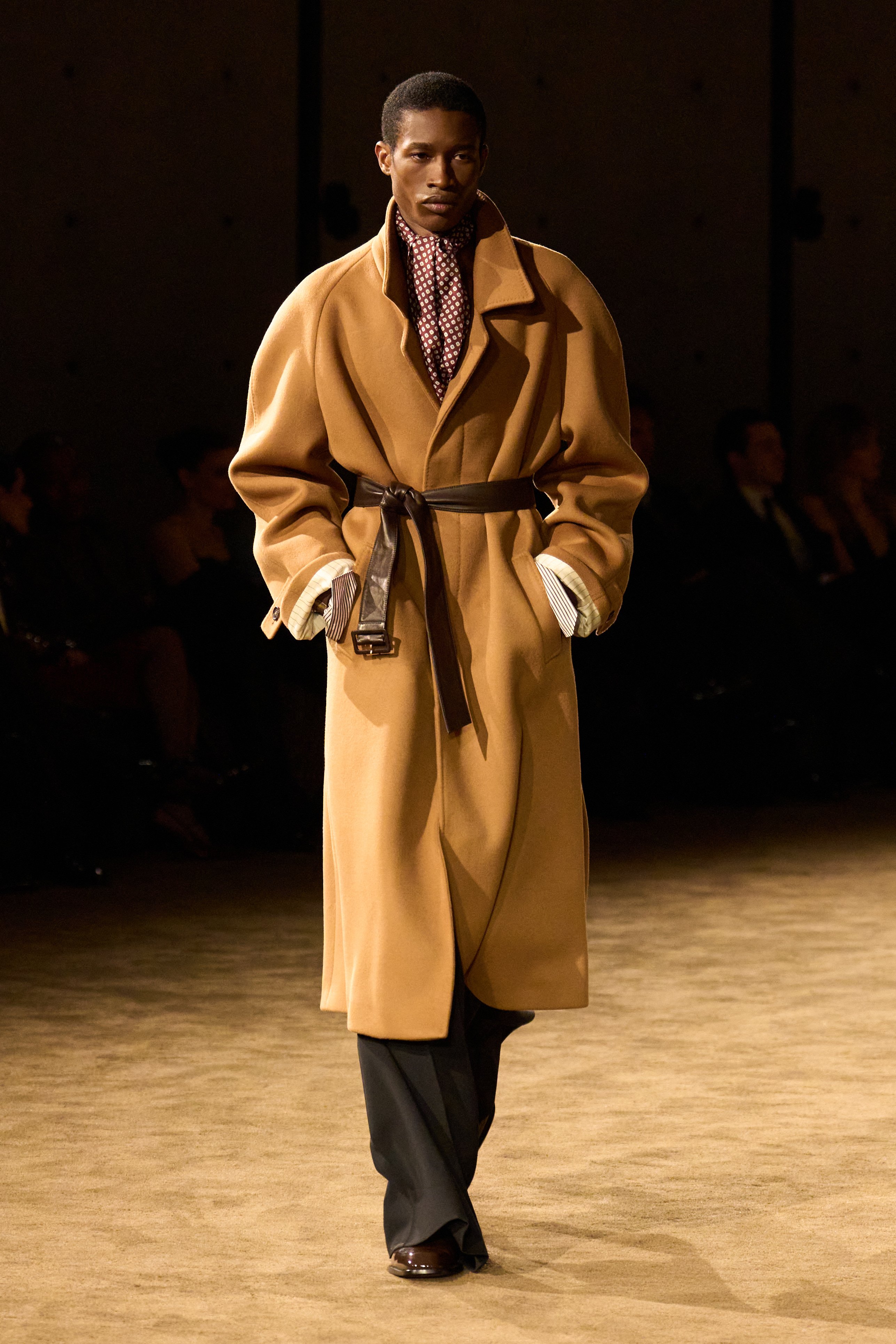
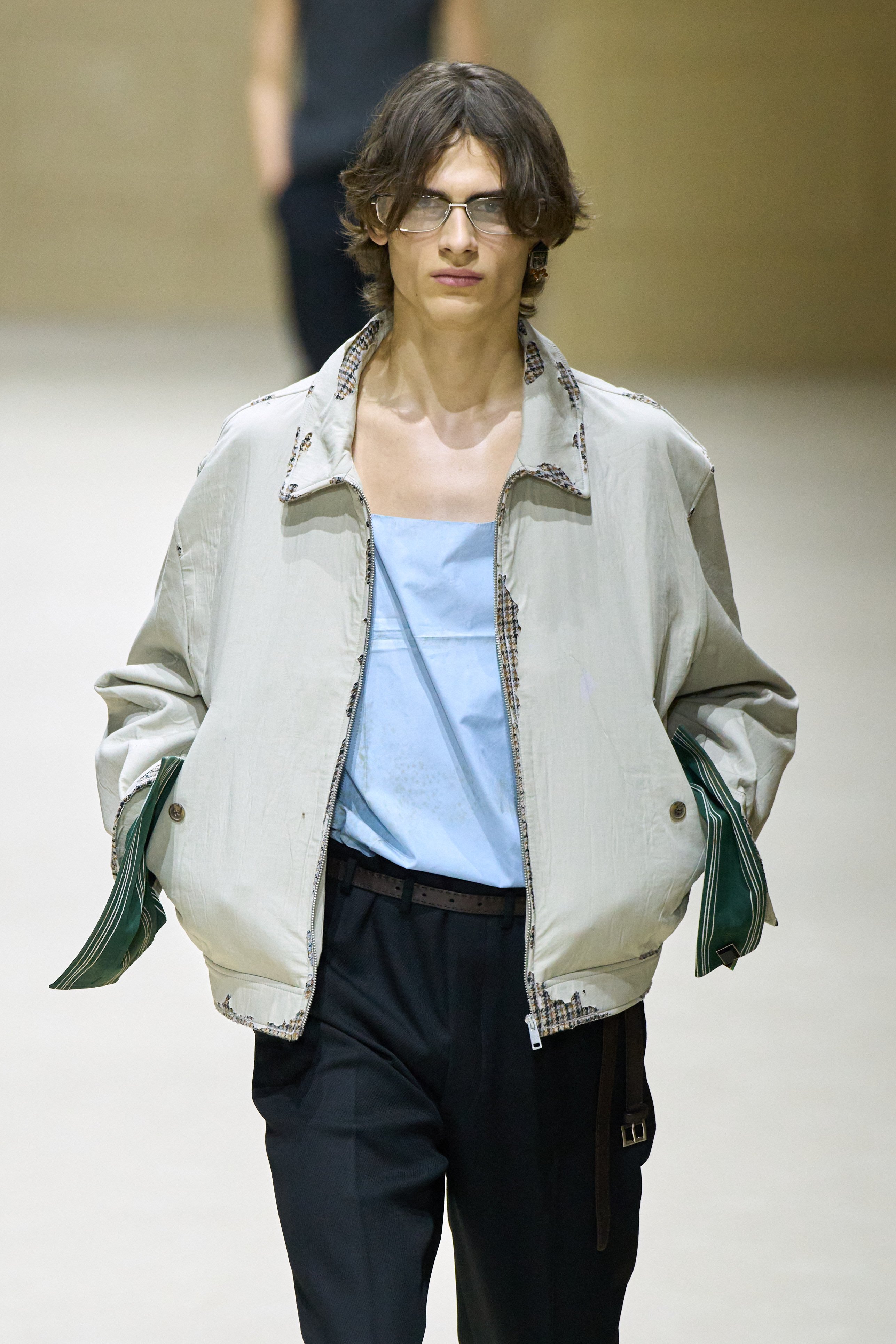
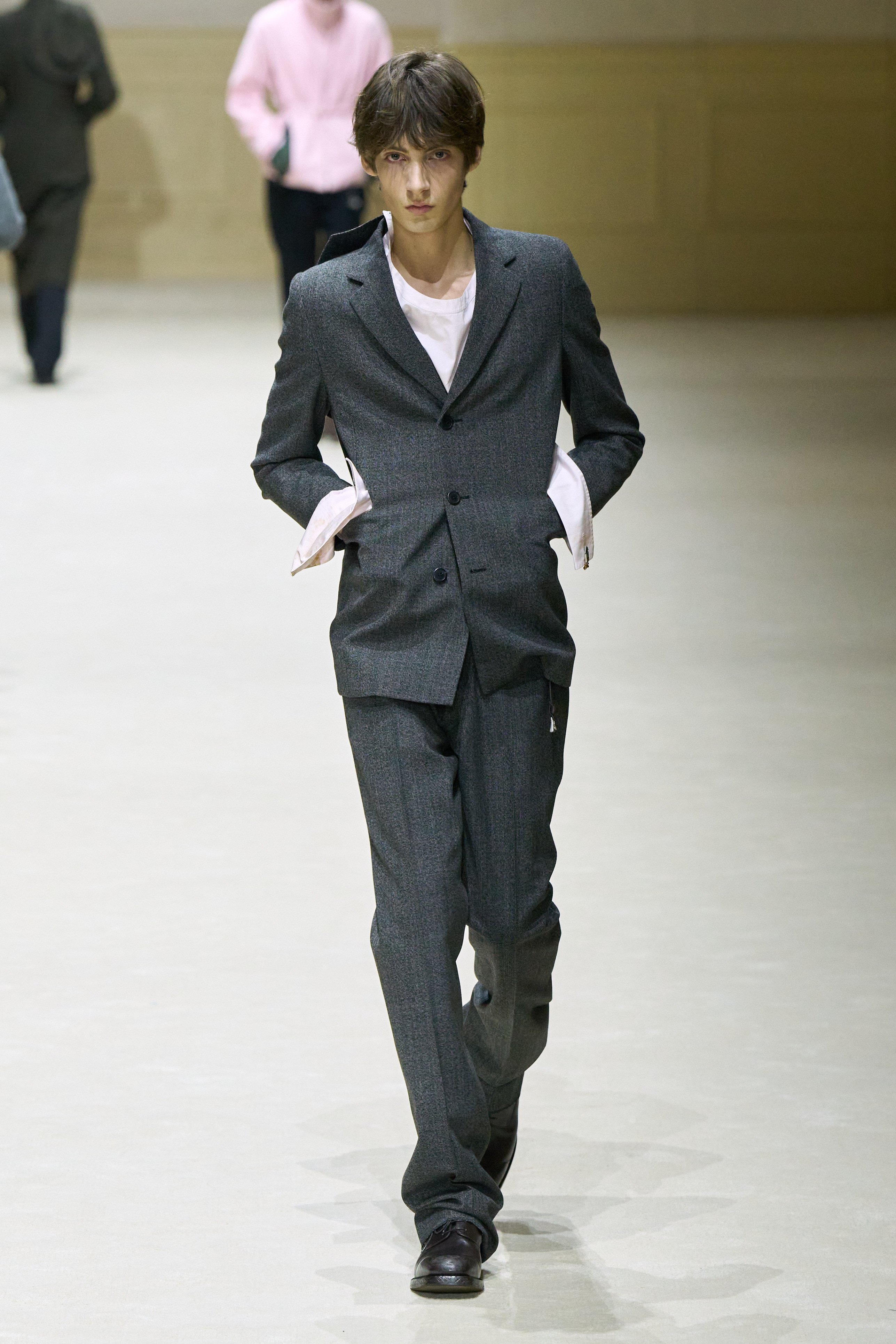
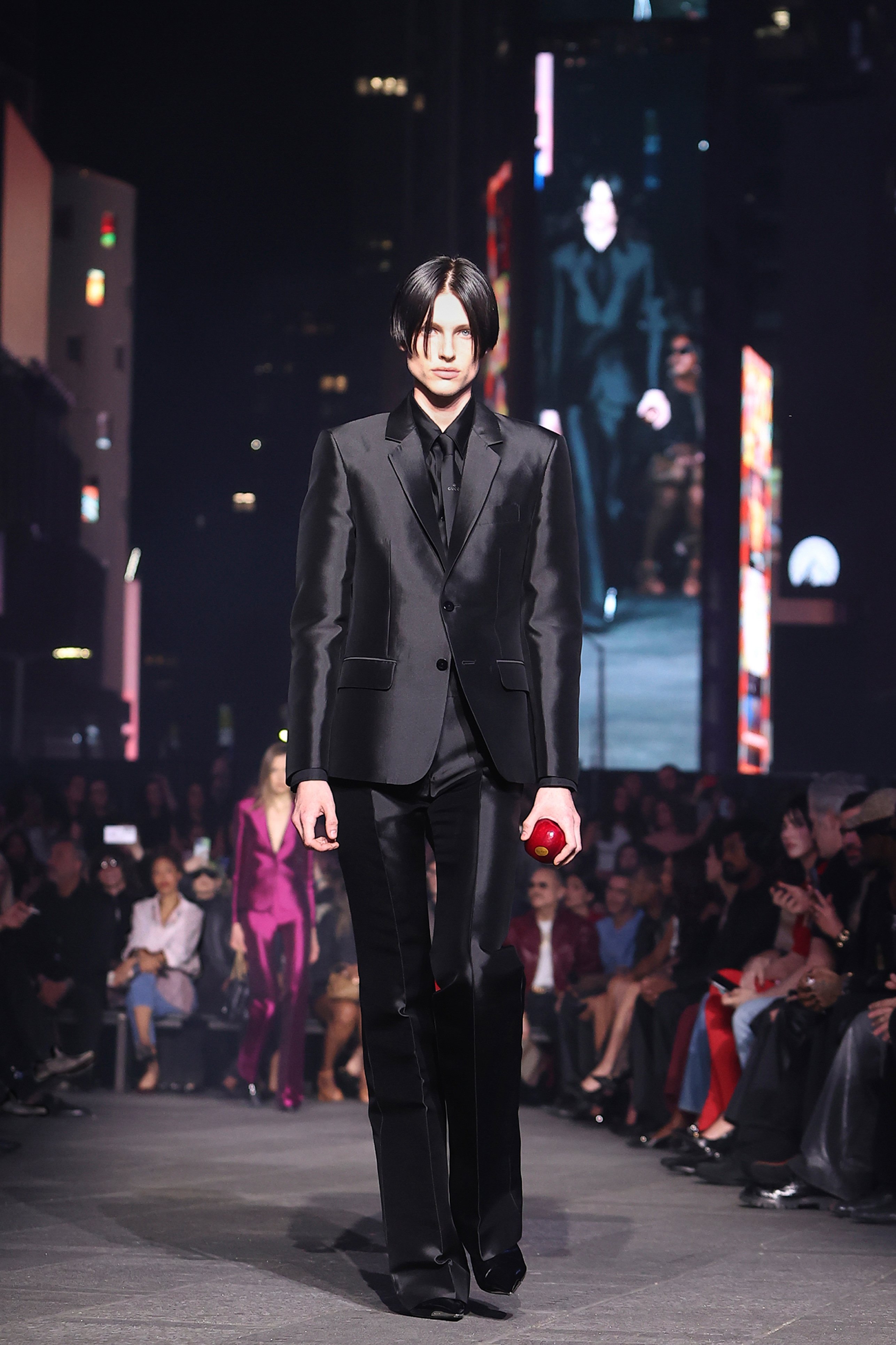
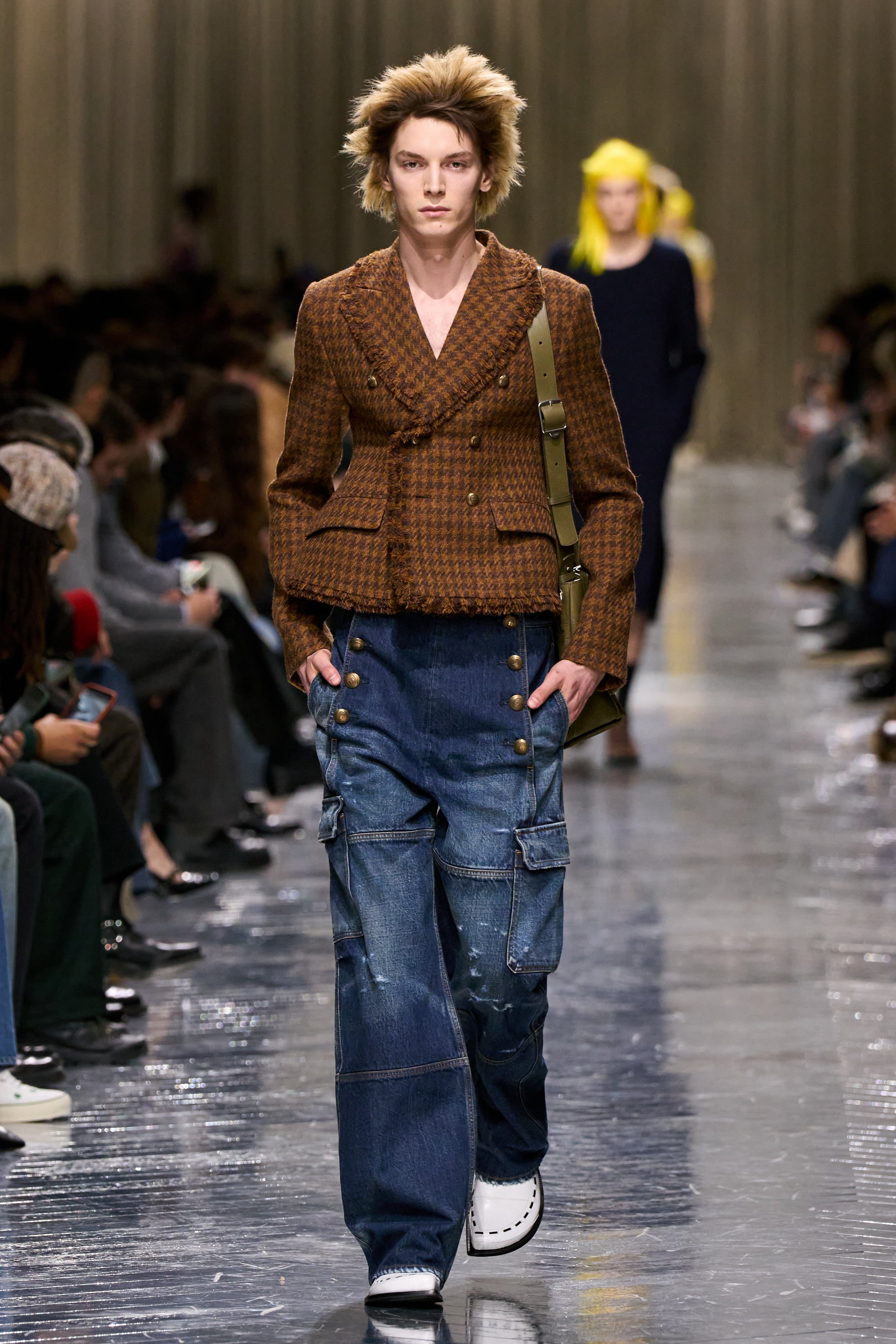


Prada Menswear, photo via launchmetrics/spotlight
Unlike the rigid look of suits from those eras, the trench coats and blazers at Saint Laurent drape over the body while retaining a tailored look. Brands like Ami Paris show the versatility of these fluid pieces, with the same ensemble looking equally sharp on Renate Reinsve as on her Sentimental Value co-star Stellan Skarsgård. And in their first post-Giorgio season, the team at Armani showcased this drape-y technique with a 1950s Ivy League aesthetic. Models walked the runway in the Armani Teatro wearing oversized ventless sport coats that encouraged a slouchy silhouette in motion.
These designers want you to think less about the office and more about wherever you’ll go to unwind afterwards. And what these looks show is how our cultural understanding of masculinity is shifting. The sartorial codes of the past are being given new life both onscreen and on the runway, thanks to a much-needed personality. Now that the festival circuit (and awards season) is about to get under way, it’s exciting to have a near-endless suiting archive to pull from.
Maybe that’s the real appeal of today’s suit. It’s no longer a costume for playing the part of “the man.” It’s simply another way to show people who you already are.
This article first appeared in FASHION’s September 2026 issue. Read more stories from FASHION’s September 2026 issue here and subscribe to the print issue here.

Harrison Clarke is a journalist and artist based in Toronto, Ontario. His passion for writing about art, fashion and film led him to earn a Bachelor's of Arts in Journalism from Toronto Metropolitan University. He has written for FASHION, blogTO, C*NT MAG, Youthquaker Magazine and the Xpace Gallery.