
Is the Bandage Dress Back?
Hervé Léger’s strappy icon has been inching its way back into pop culture—but can it work on a non-famous person?
First, it haunted my dreams. Its mummy-like aesthetic, always-pristine hourglass shape and hyper-suctioned straps in hues of lilac, turquoise and hot pink floated through my mind as I dozed off to sleep. I was thinking about it constantly, ceaselessly, to the extent that even my subconscious was not spared.
In the months leading up to this point, my feed had become a hotbed for Hervé Léger bandage dress nostalgia. Posh Spice in a purple-and-white number, her severely angled bob emanating untouchable early-aughts attitude. Rihanna in a baby pink iteration, smiling at a 2007 pre-Grammys party. Salma Hayek waiving breezily to a crowd of film-premiere photographers in a lavender mini in ’98. These are pillars of fashion history, images that have long been etched onto my frontal lobe. But in February, when Hervé Léger released a 40th-anniversary collection reimagining these very looks, the topic began occupying my mind in a more pressing way. Could the bandage dress work on a regular person? I.e., me?
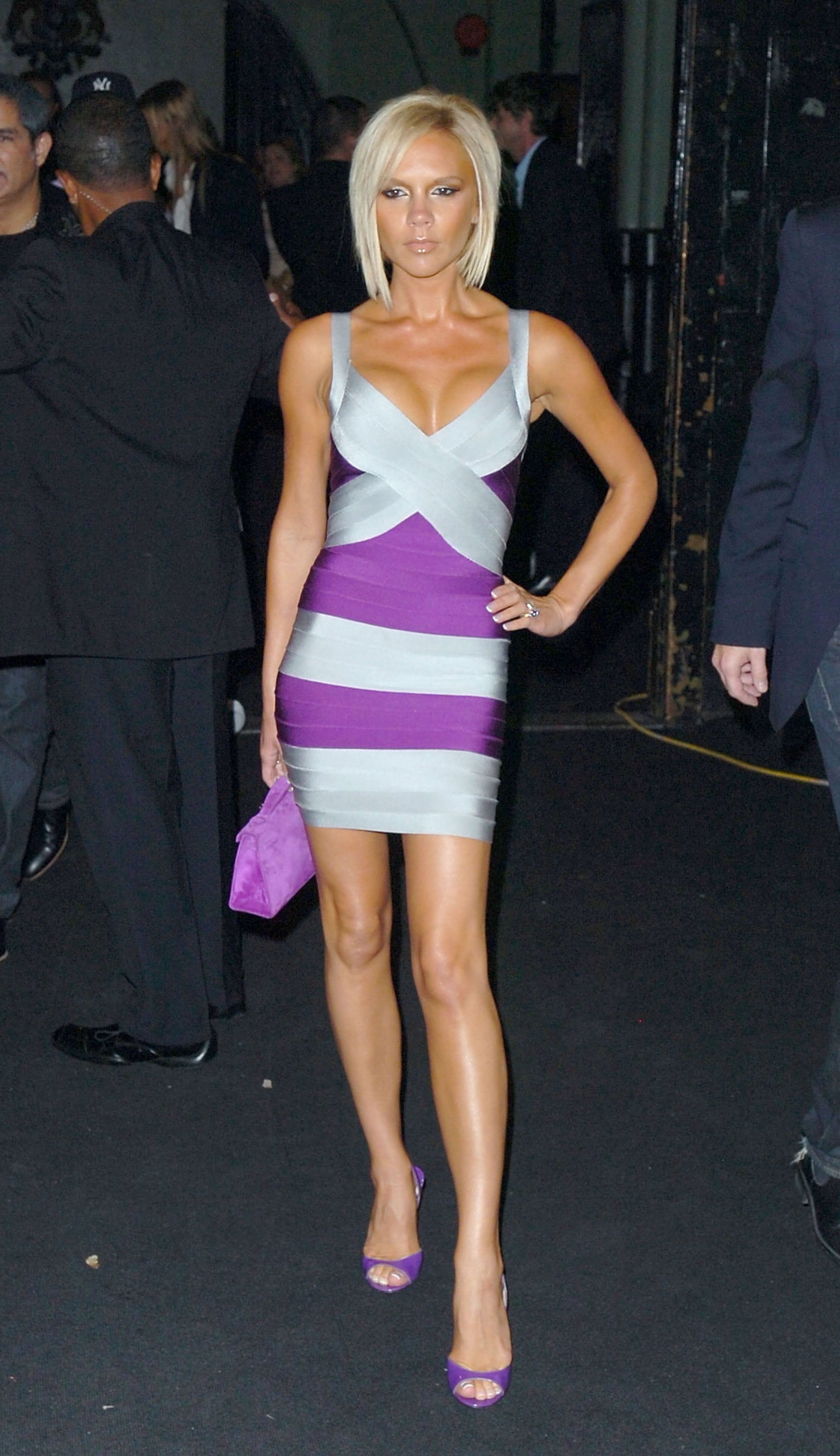
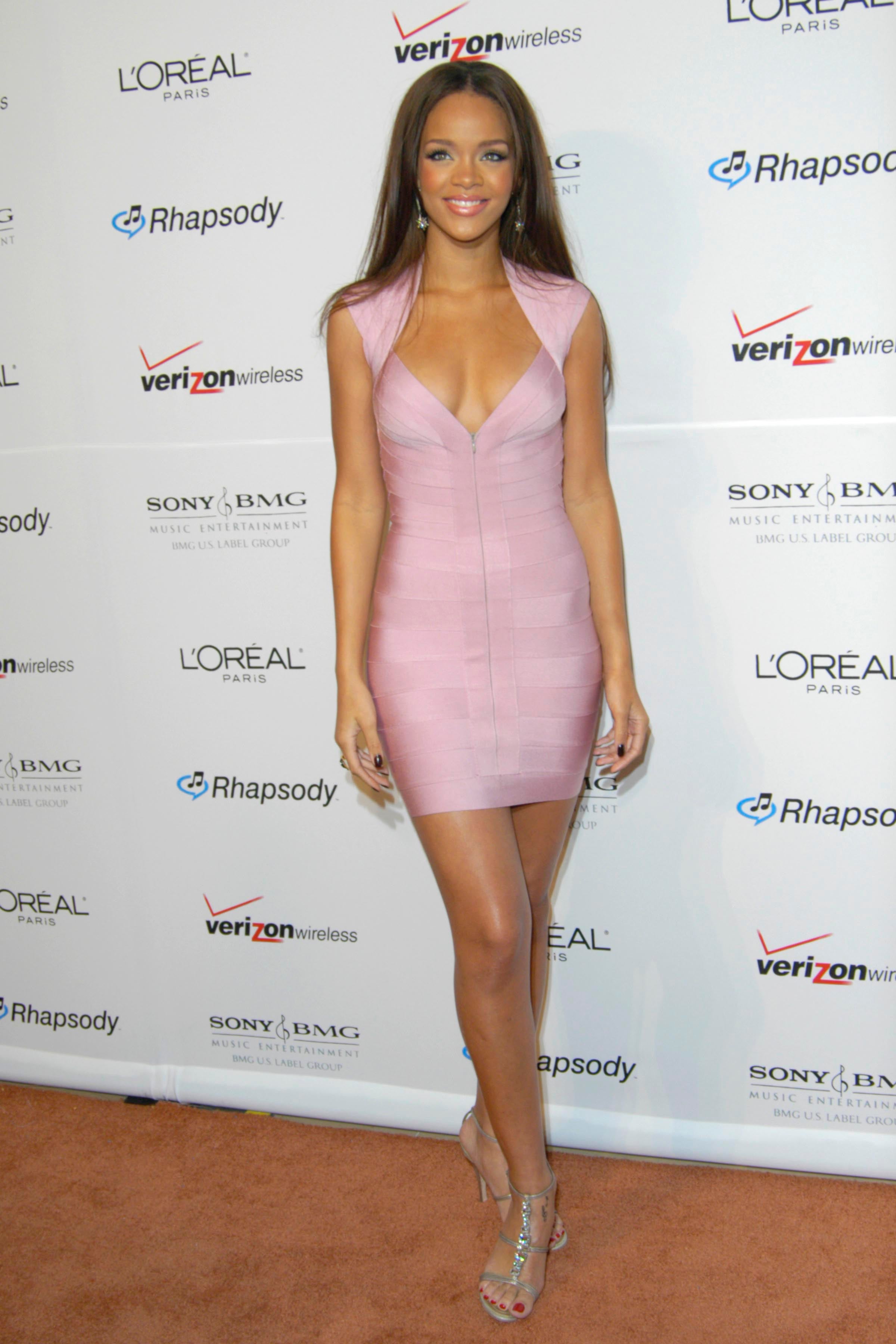
Photo by Djamilla Cochran/WireImage via Getty Images
For many, the Hervé Léger bandage dress exists only in glossy, out-of-reach imagery. Its signature thick bands encased ultra-toned celebs on red carpets and club outings. It adorned supermodels on runways in the ’80s and ’90s. By the 2000s, every It girl had one: Lindsay Lohan, Brittany Murphy, Kim Kardashian (and her wax figure). The dress was such a ubiquitous status symbol that it, inevitably, became oversaturated and melted out of public consciousness.
In recent years, though, it has been making its return—endorsed by Alix Earle, Hailey Bieber and Mikey Maddison in Anora. It’s become a golden-ticket archival find, with second-hand shopping platform Poshmark reporting an 88 percent jump in searches for the dress since June 2025. So, I perused the 40th Anniversary Collection and ordered a dress for myself.

While I waited for it to arrive, I conducted a cultural vibe check, asking industry peers how they felt about the bandage dress. One editor told me she rented one for her Las Vegas bachelorette 15 years ago—a special occasion that warranted a taste of A-list dressing. A Toronto stylist said simply, “It’s so back.” A Paris-based PR exec explained she hasn’t “had the opportunity” to rewear hers since 2014, but is waiting for the chance. An influencer said that, for the full effect, all Hervé Léger dresses must be worn with the attention-seeking, lip-biting attitude of Blake Lively in Gossip Girl.
The dress stirs up complicated emotions, one PR pro told me. “I fear this dress like I do low-rise jeans,” she said, lamenting that the skin-hugging silhouette was made for a singular body type. She tried one on in a fitting room once and “spiralled as a result.” She said she’s skeptical about how the body-con dress’s return coincides with the rise of Ozempic and beauty standards swinging towards the hyper-thin.
This is the very stigma that Michelle Ochs, Hervé Léger Creative Director, is trying to change. When she came into the role three years ago, she said her goal was to shift public perception. “I wanted to dispel the idea that you have to be a size zero and pair it with sky-high heels,” she says. “The dress itself is amazing, so I knew we had good bones. It was about repositioning it through a modern feminine lens.”
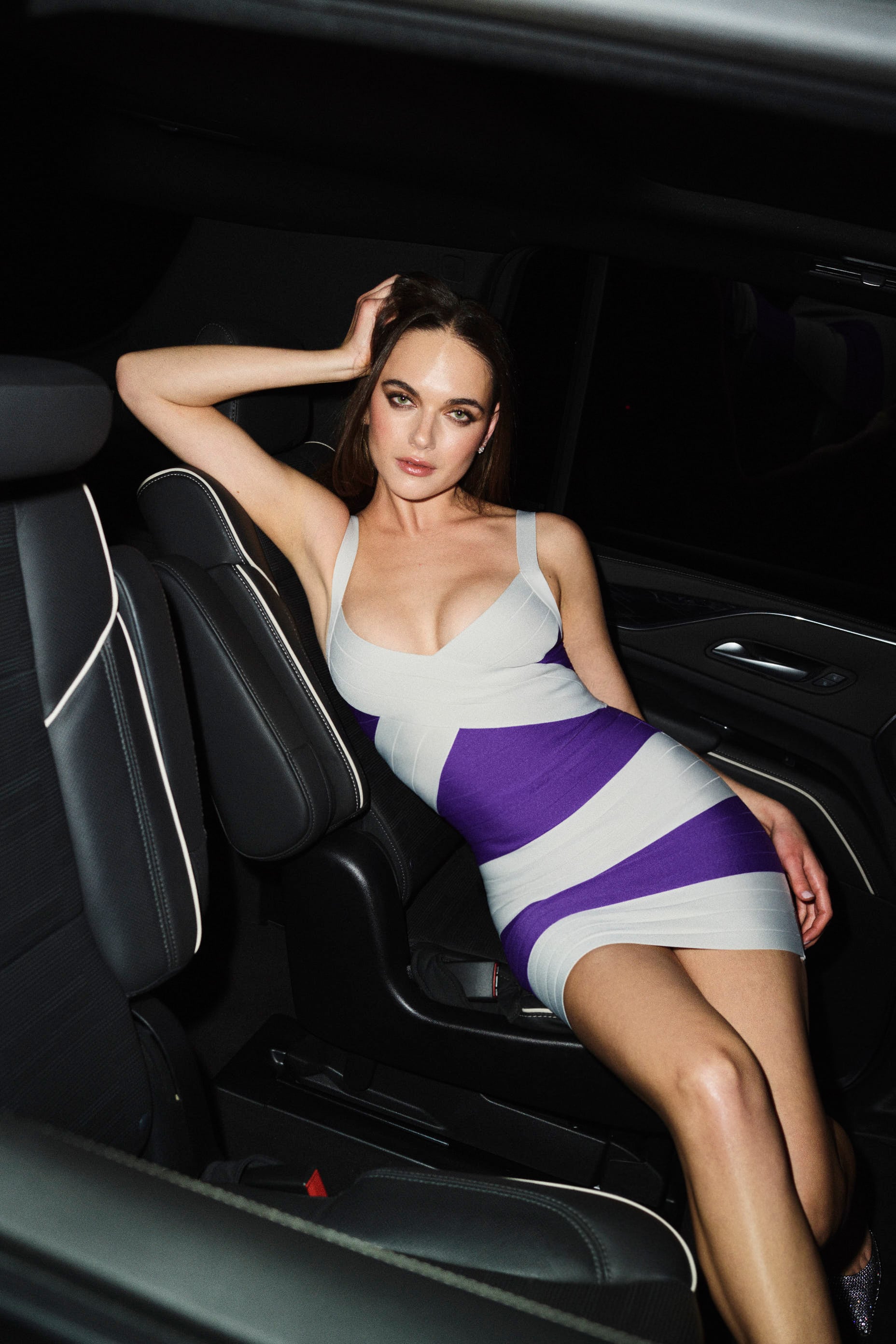
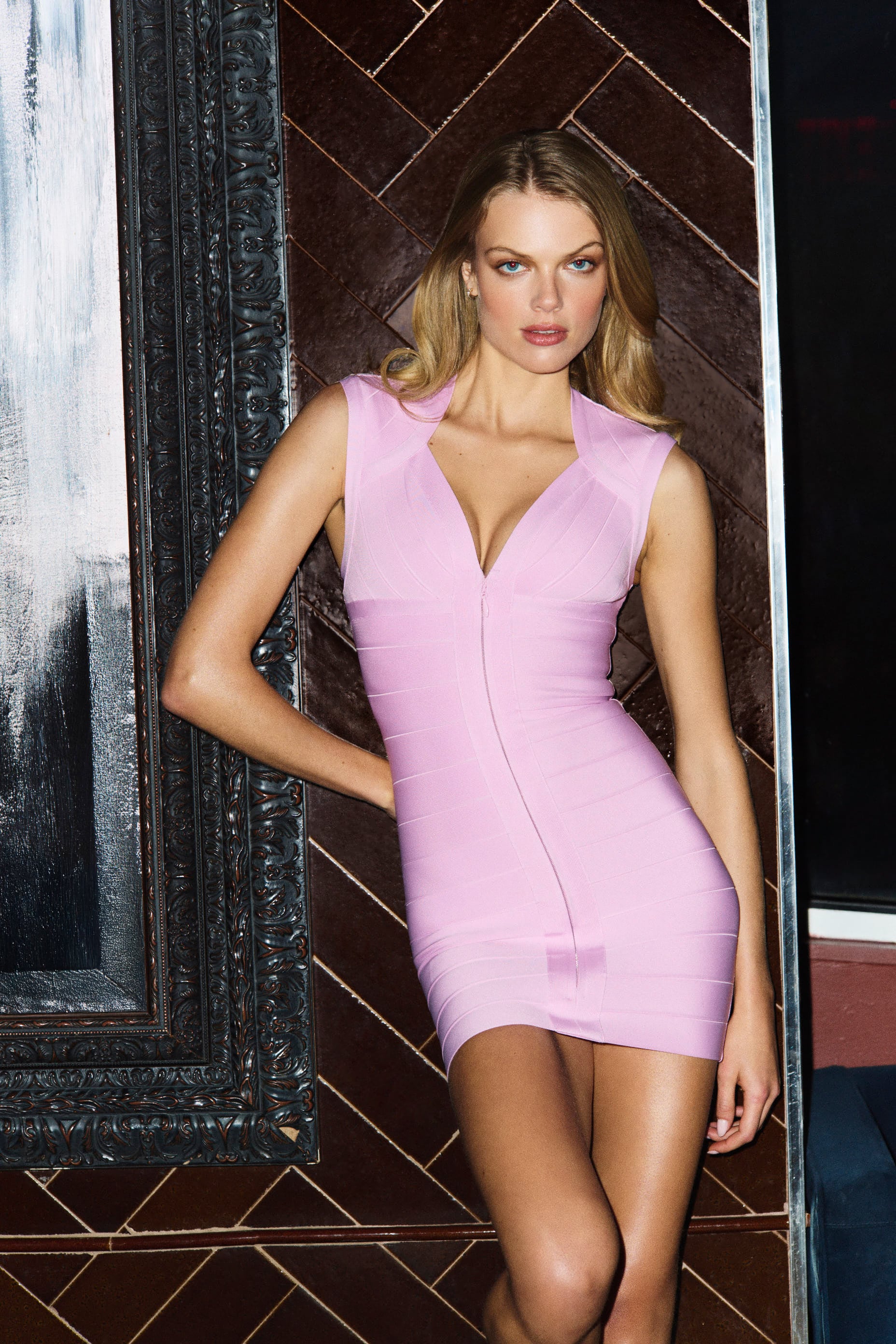
Photo courtesy of Hervé Léger
Ochs is the first female creative director of Hervé Léger, and credits the shapewear and activewear boom as part of the reason the stretchy fabric is coming back into the mainstream. In this vein, she wants to reframe skin-hugging as supportive instead of restrictive. “We needed to update how we were talking about it and the type of women we were putting in it,” she says. “I wanted them to be women and not girls.” In recent months, the brand has dressed plus-size fashion figures like Ashley Graham and Remi Bader, but Ochs acknowledges that this reframe is a process. (The dresses only go up to a size 16.)
As for my experiment, I tried the 40th Anniversary After Party Dress in the colour Punch (of the fruit variation). It’s a mini with a V-neck cut, thin straps and subtle criss-cross stitching at the chest. The first time I shimmied into it after a drab office day, I found myself…revived. I am not a body-con girl, but something about the just-right thickness and cinching elasticity made me feel held, even, oddly, cared for. I immediately took pictures with my digital camera for the full early-aughts effect.

Still, wearing the dress in public required a mental build-up. After a week of trying it on every night before bed, it came time to take it out on the town. On a rainy Friday, I showed up at a sleepy bar with a designer friend, whose exacting minimalism was completely at odds with my outré uniform. I won’t lie, I kept my coat on for the first half of the evening. To properly debut the dress, I needed to be in a club-like setting.
All timidity melted away when I ended up at my favourite dance party. I felt right at home with red lights beaming down and an untz-untz beat pulsing through the speaker. By the bar, a woman in a fabulous fur muff hat told me she loved my outfit. She said she used to have a treasure trove of Hervé Léger bandage dresses. Her favourite one featured silver, green and blue lining, and she highly regrets giving it away. “They’re just magic dresses,” she said. I agree.
At the end of the night, I realized I had shut the place down—very After Party-esque—so I began to head out. A cute bartender cleaning up abandoned cups at a nearby table came over and complimented my dress. For the flirtatious plot, we exchanged information. (This is not the only metric of a successful outfit, but, you know, it doesn’t hurt.) I exited feeling like I had left a 2000s-era It girl stamp in my wake.
For Ochs, the dress is a portal to this exact sort of spontaneity and glamour. “I think people want to go out,” she says. “They want interaction. They want to get dressed, get up off the couch and have fun!” I never thought I’d one day wear the bandage dress I grew up idolizing and slightly fearing. But when I did surrender myself to its form-fitting sorcery, things shaped up pretty well.

Natalie Michie is the Fashion & Features Editor at FASHION Magazine. With a pop culture obsession, she is passionate about exploring the relationship between fashion, internet trends and social issues. She has written for Elle Canada, CBC, Chatelaine and Toronto Life. In her spare time, she enjoys reading and over-analyzing movies on TikTok.