
How Lauren Chan’s Oscars Dress Came to Life
Ahead of the 98th Academy Awards, the model talks working with designer Leeland Mitchell and the ever-growing importance of plus-size representation on the red carpet.
Outfit malfunctions? Lauren Chan doesn’t know them. “I don’t claim that energy,” the model says when I ask if she’s ever had a piece of clothing go awry on a red carpet. “It has not happened to me yet—thank God—but to know me is to know that if it malfunctions, I’m taking it all off and it will be a moment,” she laughs. “All press is good press!”
It’s not a bad mindset to have. In fact, as a fashion expert for Etalk’s 2026 Oscars coverage, this ready-for-anything attitude is basically a prerequisite. Chan joins Etalk’s Tyrone Edwards and Lainey Lui on this year’s red carpet, which means she not only has to come armed with well-researched references (more on that later), but she must also serve an awards-ready look of her own. And that, she is prepared to do.

For the event, Chan worked with an expert team, including Etalk stylist Simone Faloona, makeup artist Shaby Aghdassi and hair stylist Caitlin Cullimore. For the sartorial pièce de résistance, she tapped Leeland Mitchell, winner of Project Runway Canada, to create the couture dress of her dreams.
To Chan, who appeared as a guest judge on the competition show, working with Mitchell was a no-brainer. “He has such a high level of skill with sewing imaginative garments,” she says of the designer, noting the intricate Chinese dragon top that helped him win Project Runway. She knew the possibilities were endless, but she wanted to honour the Academy-ready aesthetic, which often leans towards simplicity. “I wanted something corseted and traditional, but also wanted to bring the Lauren Chan stamp, which I think is gay, fun and boundary-pushing.” The result is a two-piece black corset gown with florals bursting at the neckline, evoking an exaggerated vase. “I’m there to give people their flowers, so we took that quite literally,” Chan explains.

The references were deep-rooted. For one, Chan cites a 2024 Oscars look as a jumping-off point. “Two years ago, I joined the fashion panel for Etalk’s post-Oscars episode, and my favourite look of the evening was Sandra Hüller in a black Schiaparelli gown with an exaggerated shoulder. I wanted to pay homage to that with the shape of the dress.” Of course, she also aimed to bring some camp into the conversation. To do so, she referenced bouquet flower gowns by Moschino, Schiaparelli, Alexander McQueen and Matières Fécales. “There was a moment where I wanted to be flowers only—no black gown,” she says. “But we’ll save that for another time.”
From start to finish, the dress itself took 26 hours to make. Mitchell describes the process as a new kind of rush. “Project Runway had its own challenges, specifically trying to impress a panel of judges,” he tells FASHION. “But now the judges are a room of celebrities and actors we all love.” The most difficult aspect was securing the florals around the neckline and making sure the avant-garde ensemble was also wearable.

“I’ll be in this look for up to 16 hours, so I have to feel physically okay,” Chan explains. To make sure she would, Mitchell constructed the dress from a cotton/poly ponte jersey—a fabric that kept a strong corsetry structure while allowing movement and breathability.
To quell pre-red-carpet nerves, Chan explains the importance of understanding Academy Awards history. Along with watching every nominated film (she’s partial to Sinners and One Battle After Another), Chan combed through Oscars fashion archives, making note of subtle dress-code subversions over the years. “It’s not a place to take huge risks, so when people do take some small risk, I really am enamoured by that.” She cites Lucy Liu in crystal-embellished red Versace and Halle Berry’s iconic sheer floral gown. “I commend the folks who insert their own wink into what is typically quite traditional awards dressing.”
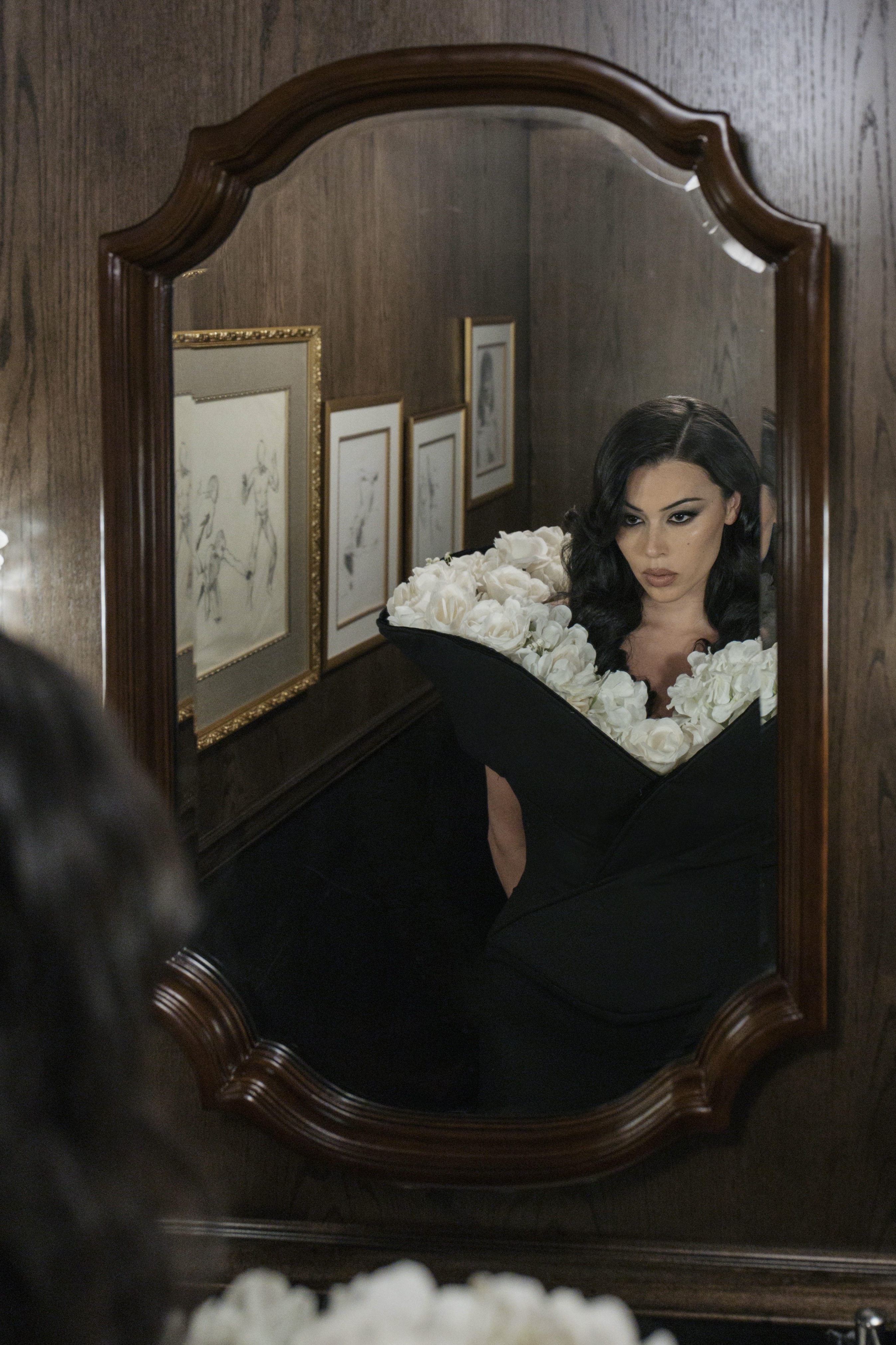
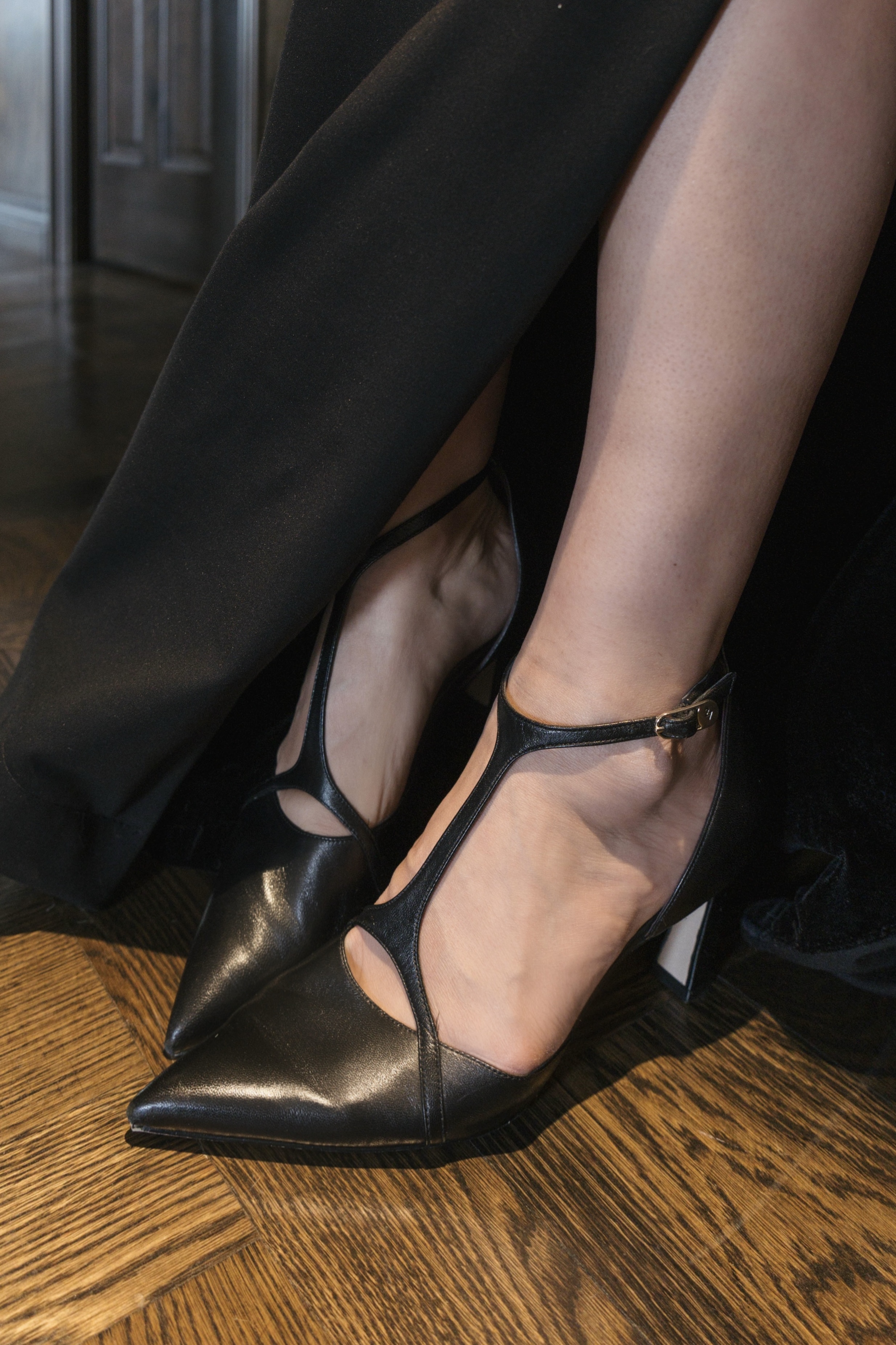
Photo by Mikaela Mertens
In that vein, she also praises red carpet stars who aren’t a size two. “It’s so much harder for those of us who are above sample size to get dressed by designers,” she says. “That can tend to sound like a woe-is-me statement, but it’s really deep.” With fashion being an integral part of an awards campaign, lack of access “widens the gap between who’s valuable in Hollywood and who is not,” Chan says.
She emphasizes that the outfits we see on red carpets inform our perceptions of people in the public eye. “The way that Hollywood positions its celebrities trickles down into the culture,” she says. “So if the straight-size stars are getting dressed in coveted archival pieces or current season stuff, and the stars who wear bigger sizes don’t fit into those samples, they’re seen as less than.” That means less access to brand deals and movie roles, and less representation overall. “It starts with the dress someone gets to wear on a red carpet like the Oscars.”
Needless to say, Chan holds deep reverence for the iconic event and the responsibility of showing up ready. As for her mood heading into it? “I feel like I’ve arrived at a stylistic version of myself that feels authentic. I don’t need everybody to like what I’m wearing—i.e. to like me,” she breezes. “Not everyone’s going to approve of it, and that’s okay, because I feel great in it.” No malfunctions here.

Natalie Michie is the Fashion & Features Editor at FASHION Magazine. With a pop culture obsession, she is passionate about exploring the relationship between fashion, internet trends and social issues. She has written for Elle Canada, CBC, Chatelaine and Toronto Life. In her spare time, she enjoys reading and over-analyzing movies on TikTok.