The Tang Jacket Is More than Just a Trend
While the “neo-Chinese” aesthetic feels more visible than ever, the absence of names and histories shows how easily living traditions are reduced to fleeting trends.
Lately, everyone seems to be in their “Chinese era.”
With the rise of Douyin‑style makeup, China‑focused travel content and the growing popularity of traditional Chinese medicine, Chinese culture feels more visible than ever in the mainstream. As a Sino‑Vietnamese cultural fashion content creator and community leader, this movement makes me feel both celebrated and uneasy.
On one hand, I’m glad Chinese culture is getting the attention it deserves after all these years. On the other, watching familiar silhouettes and motifs circulate in mainstream media without context or credit shows how easily culture gets flattened into a “trend” within Western fashion cycles. We can see plenty of examples of this with the annual wave of Lunar New Year collections, where brands rely on simple red colourways and symbolic accents instead of cultural coherence.
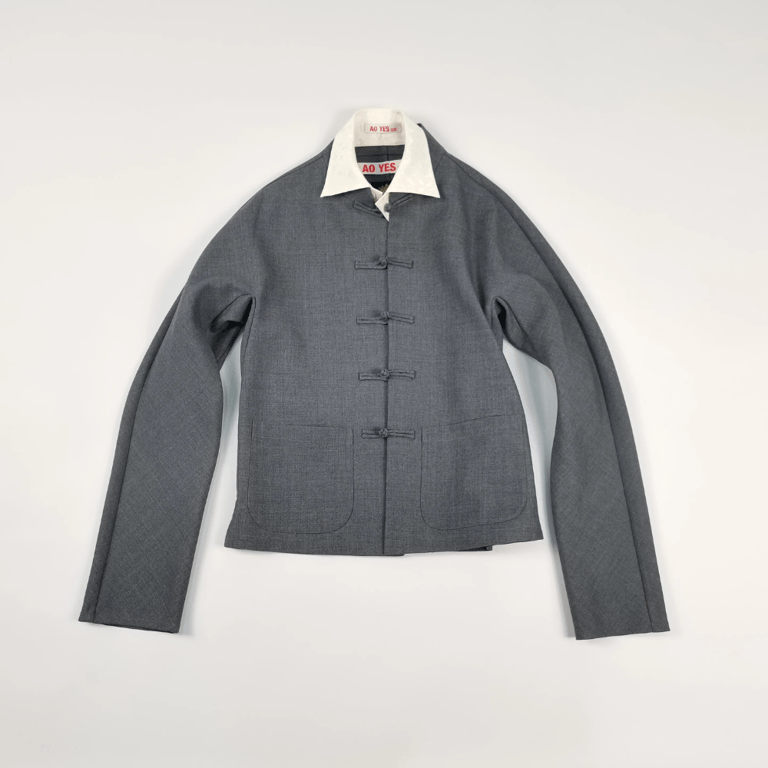
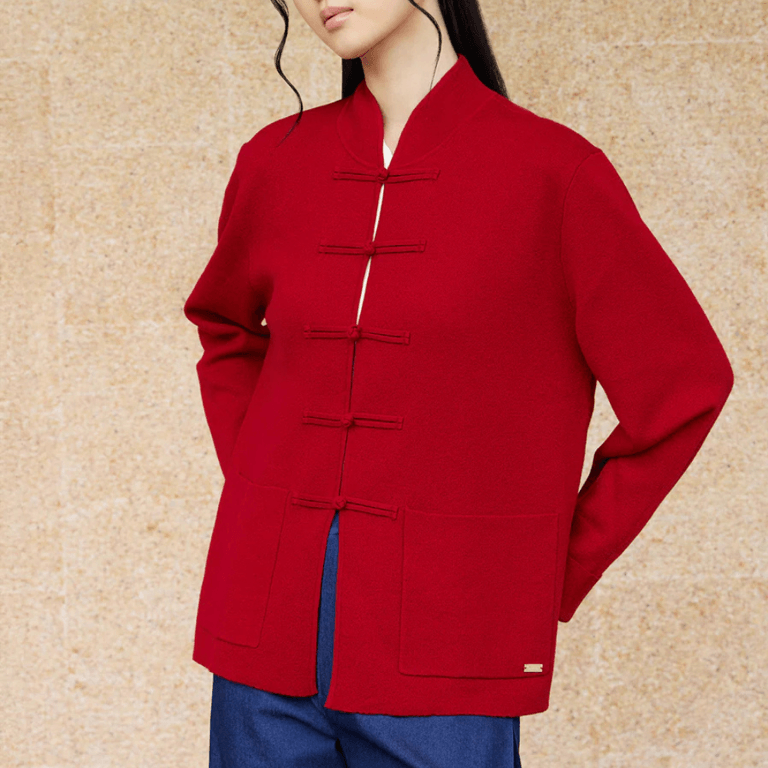
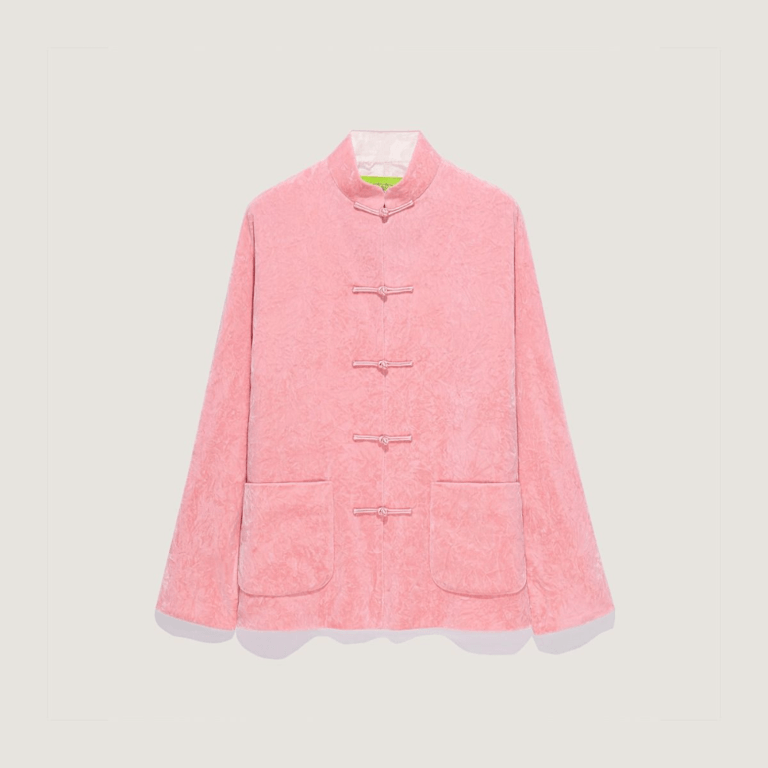
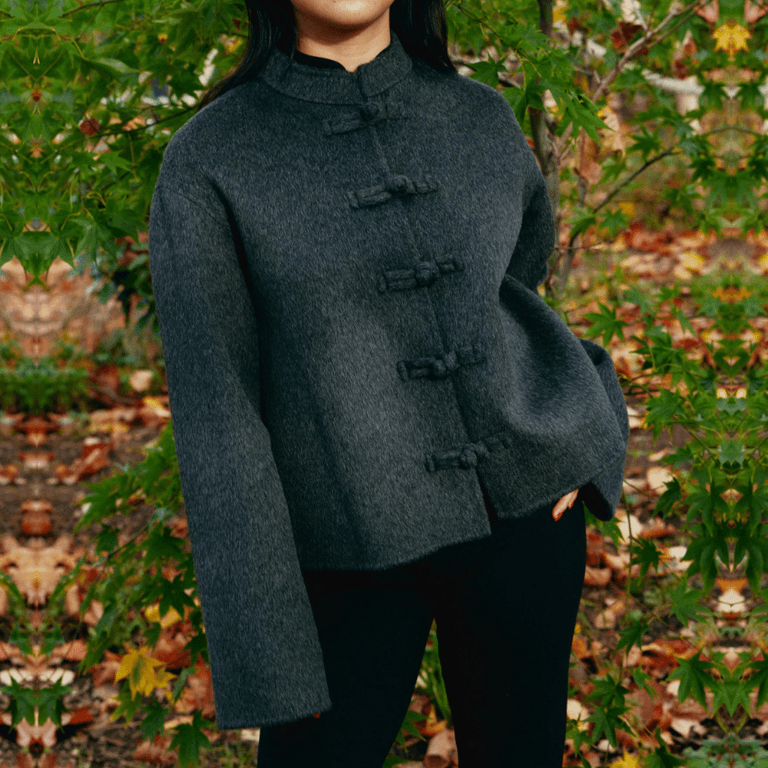
You’ve probably come across the viral limited‑edition Adidas Tang jacket, widely referred to as a Mandarin jacket and its recent expansion beyond its initial market into Europe. Contrary to its name, it is a style of Chinese jacket that draws from late Qing dynasty dress. Recognizable through its structured silhouette, symmetrical front opening and its use of pankou, a traditional decorative and functional fabric-knotted closures. As the design gained visibility, the term “Mandarin collar” became a catch‑all, used broadly to describe a range of jackets with any of these distinct touches. This collapses the Tang-style jacket, or tangzhuang, into a single detail, simplifying a storied garment shaped by centuries of adaptation.
Non‑Asian brands like the Amsterdam-based quiet luxury label ROHÉ participate in this with products like their Mandarin Linen Jacket. Similarly, the Regin Jacket from Reformation and its use of frog-knot fasteners mirror the Chinese pankou, but the brand’s language avoids any mention of inspiration or origin. When tangzhuang and its features are folded into Western fashion cycles under the vague label of the “Mandarin collar,” I can’t help but feel uneasy watching something rooted in my culture move through fashion as a seasonal moment.
What is often overlooked in these conversations is that tangzhuang itself is already the product of adaptation. Its roots can be traced back to the Manchu riding jacket, designed for mobility on horseback. During the Qing dynasty, this style was formalized and became part of the mandated uniform for officials. The tangzhuang most people recognize today, however, is actually a much more recent interpretation. From the late twentieth century onward, there have been renewed efforts within China to revisit traditional clothing in ways that felt relevant to contemporary life.
When these garments are stripped of their names and histories, they become easy to consume—and just as easy to discard.
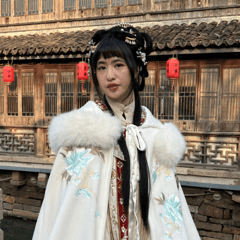
In the 1980s, designers used Qing-era lapel coats as a reference while introducing a stand-up collar and Western pattern-making to suit contemporary bodies and settings. Later movements, including the hanfu revival that emerged in the early 2000s, reflect a continued and evolving interest in cultural clothing. Together, these developments helped shape what is now often described as the “neo-Chinese” aesthetic, where heritage is not frozen in time, but continuously reinterpreted for the everyday.
At its core, this is not an argument against wearing tangzhuang or Tang‑style jackets at all. Cultural exchange has always existed, and clothing has long moved across borders and communities. What matters is how this exchange happens and how it is represented.
When these garments are stripped of their names and histories, they become easy to consume—and just as easy to discard. At a moment when Lunar New Year collections are both highly visible and commercially influential, cultural literacy becomes part of ethical design and consumption. That can begin with something as simple as naming garments accurately, acknowledging when inspiration is borrowed rather than invented and understanding that these styles come from living cultures. It can also mean supporting Chinese‑owned brands and designers whose work is rooted in these traditions. Visibility alone is not enough; what we need is care. Admiration does not have to come at the cost of context.